Every October, Christians seem to find themselves asking the same question:
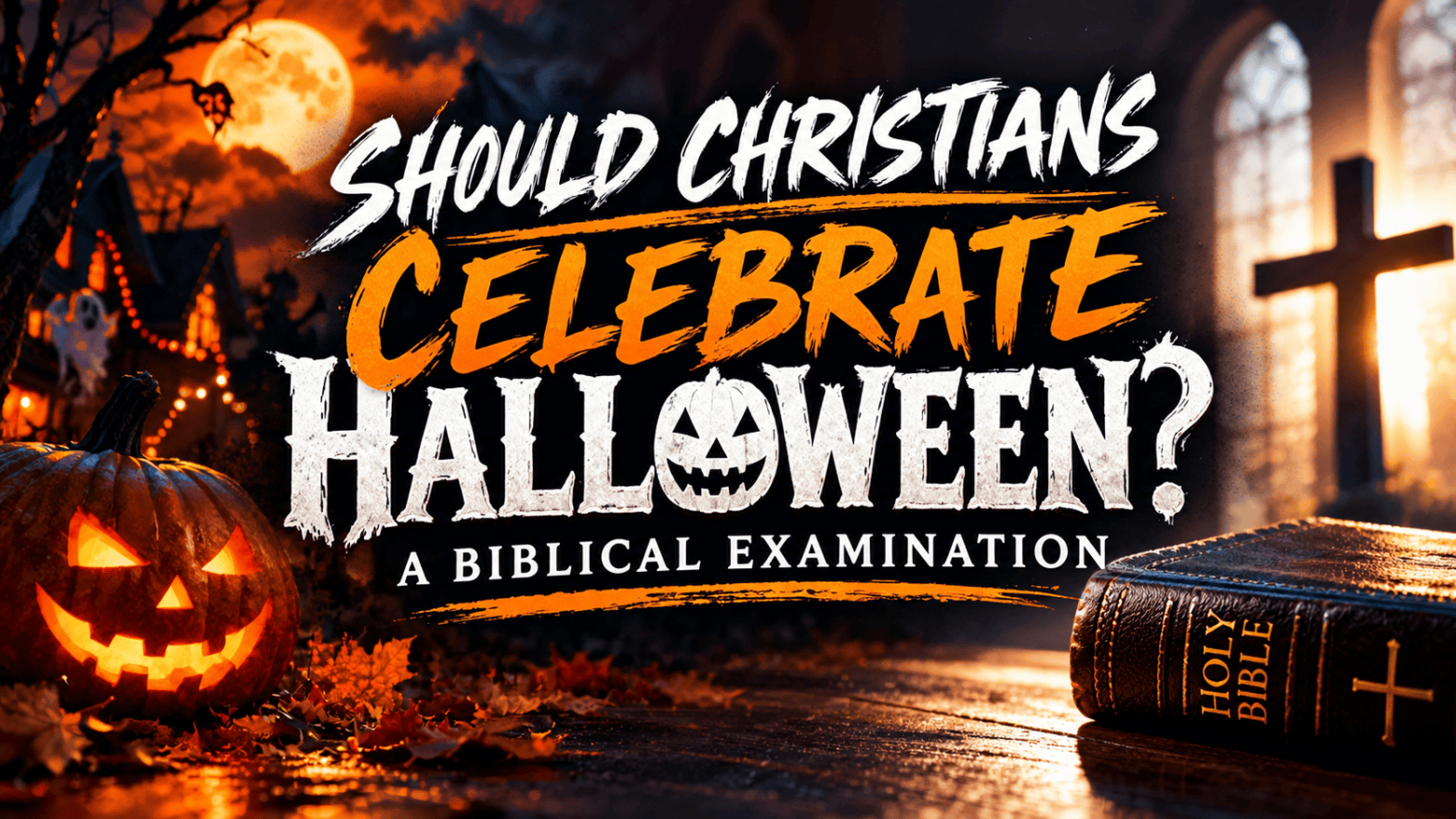
Should Christians celebrate Halloween?
Some Christians have no problem with trick-or-treating, costumes, pumpkins, and handing out candy. Others believe Christians should avoid Halloween altogether because of its association with death, witchcraft, ghosts, and the occult.
So what does the Bible actually say?
The Bible never mentions Halloween by name.
The holiday developed long after the biblical period, through a complicated mixture of ancient Celtic traditions, Christian observances surrounding All Saints’ Day, medieval customs, and eventually modern American culture.
Therefore, we shouldn’t pretend Scripture gives us a direct command saying either “Christians must celebrate Halloween” or “Christians must never celebrate Halloween.”
Instead, we need to apply biblical principles.
And there are several principles that can help us think carefully about the question.

What Is Halloween?
Before discussing whether Christians should participate, it’s helpful to understand what Halloween actually is.
The word Halloween comes from All Hallows’ Eve, meaning the evening before All Saints’ Day.
Historically, Halloween developed over many centuries and incorporated traditions from different cultures.
One important part of its history is Samhain, an ancient Celtic festival associated with the end of the harvest and the beginning of winter. Historical sources describe beliefs surrounding the dead and the supernatural as part of Samhain traditions. Christian observances surrounding All Saints’ Day and All Souls’ Day later developed alongside and interacted with these traditions.
Over time, Halloween continued evolving.
The Halloween celebrated by most Americans today—with children in costumes, candy, pumpkins, neighborhood parties, and decorations—is not identical to the ancient practices from which some Halloween traditions developed.
That historical distinction matters.
An activity’s historical association doesn’t automatically determine the morality of every modern form of that activity.
But history can still help us understand why certain Halloween symbols and practices have supernatural or occult associations.
What Does the Bible Say About the Occult?
Here Scripture is considerably clearer.
The Bible repeatedly prohibits God’s people from participating in occult practices.
In Deuteronomy 18, God specifically prohibited Israel from practicing things such as divination, sorcery, interpreting omens, witchcraft, consulting mediums, necromancy, and attempting to inquire of the dead.
The principle is not merely that these activities are “weird.”
They represent an attempt to obtain supernatural knowledge or power apart from God.
And the New Testament continues to treat occult practices seriously.
In Acts 19, people in Ephesus who became Christians publicly abandoned their involvement with magic:
Also many of those who were now believers came, confessing and divulging their practices. (Acts 19:18)
They even destroyed their books associated with magical practices.
That gives us an important boundary.
Christians should not participate in actual occultism simply because it happens to be associated with Halloween.
A séance is still harmful even if it happens on October 31.
Trying to contact the dead is not Christian entertainment.
Playing with occult practices is fundamentally different from simply encountering fictional or cultural imagery.
But Does That Mean Christians Can’t Dress Up?
Not necessarily.
This is where we need to avoid making Scripture say more than it says.
The Bible doesn’t contain a command against wearing costumes.
There’s nothing inherently sinful about dressing up as a firefighter, athlete, superhero, historical figure, animal, or fictional character.
The question becomes more complicated when the costume itself intentionally celebrates or identifies the person with something Scripture condemns.
For example, dressing up as a firefighter and dressing up specifically to portray a practitioner of witchcraft aren’t morally identical questions.
The important question isn’t simply:
“Is this a Halloween costume?”
It’s:
“What am I actually portraying, celebrating, or participating in?”
That distinction becomes important throughout the Halloween discussion.

What About Romans 14?
Romans 14 provides one of the most important biblical principles for thinking about disputed matters like this.
Paul addresses Christians who disagreed over practices that Scripture did not explicitly require everyone to handle identically.
He writes:
One person esteems one day as better than another, while another esteems all days alike. Each one should be fully convinced in his own mind. (Romans 14:5)
The principle is that Christians shouldn’t turn every disputable matter into a test of fellowship.
Some matters are clearly commanded or forbidden by Scripture.
Other matters require wisdom, conscience, love, and careful application of biblical principles.
Halloween falls into this second category as a holiday itself.
Scripture doesn’t say, “Thou shalt celebrate Halloween.”
It also doesn’t say, “Thou shalt never participate in any Halloween-related activity.”
Therefore, Christians have to think carefully about what they’re actually doing.
Christian Liberty Doesn’t Mean “Anything Goes”
There’s an important qualification.
Christian liberty does not mean:
“If the Bible doesn’t explicitly mention it, I can do whatever I want.”
Paul gives us a much better principle in 1 Corinthians 10:
“All things are lawful,” but not all things are helpful. “All things are lawful,” but not all things build up. (1 Corinthians 10:23)
He continues by telling Christians to seek the good of their neighbor.
This is crucial.
The question isn’t merely:
“Can I technically do this?”
A better question is:
“Does this honor Christ, and does it build up rather than tear down?”
Christian liberty is governed by love.
What About Halloween’s Pagan Origins?
This is where Christians sometimes make an argument that sounds convincing but needs more nuance.
You may have heard:
“Halloween is pagan, therefore Christians can’t participate.”
The historical connection to pre-Christian Celtic traditions is real, and many Halloween customs have complicated histories. But modern Halloween developed through multiple historical layers, including Celtic traditions, Christian observances, medieval customs, European folklore, and modern American culture.
Therefore, we shouldn’t oversimplify the history.
More importantly, the Bible doesn’t teach that something is automatically sinful simply because an ancient pagan culture once used something.
The New Testament gives us a helpful analogy in Paul’s discussion of food associated with pagan idol worship.
Paul explains that an idol itself has no real divine existence, while simultaneously warning Christians against actual participation in idolatrous worship. (1 Corinthians 10:1-33)
That distinction is important.
There is a difference between:
something once being associated with paganism
and
a Christian presently participating in pagan worship.
Those aren’t necessarily the same thing.
What About Ghosts, Demons, and the Supernatural?
Christians should also avoid two opposite errors.
• The first is denying the supernatural.
The Bible clearly teaches the existence of angels, demons, Satan, and spiritual conflict.
• The second is becoming fascinated with darkness.
Scripture doesn’t encourage Christians to obsess over demons, pursue supernatural experiences, or experiment with occult practices.
Instead, Christians are called to belong entirely to Christ.
Paul writes:
Take no part in the unfruitful works of darkness, but instead expose them. (Ephesians 5:11)
That’s a serious principle.
There is a difference between acknowledging that evil exists and actually seeking, or celebrating, evil.
There’s a difference between understanding demons biblically and becoming fascinated with demonology.
There is a difference between a fictional monster costume and deliberately participating in occult practices.
Wisdom requires us to distinguish those things.
What About Horror Movies?
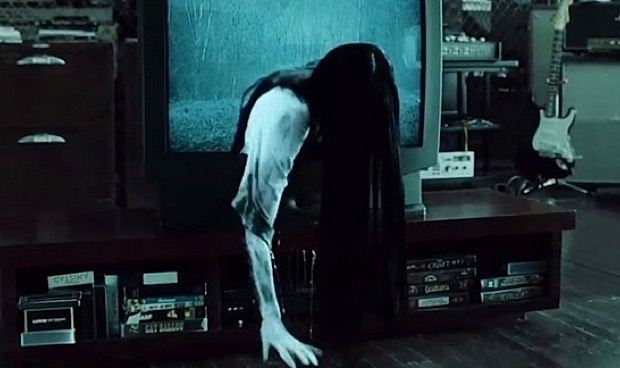
The same principles apply to entertainment.
Not every scary story is automatically sinful.
The Bible itself contains frightening imagery, supernatural events, judgment, death, demons, and descriptions of horrifying things.
But Christians should still ask what they are putting before their minds.
Philippians 4:8 gives us a useful principle:
Finally, brothers, whatever is true, whatever is honorable, whatever is just, whatever is pure, whatever is lovely, whatever is commendable, if there is any excellence, if there is anything worthy of praise, think about these things.
Christians shouldn’t use Halloween as an excuse to consume entertainment that celebrates what God calls evil.
If a particular movie, game, book, or attraction glorifies occultism, sexual immorality, cruelty, or evil, a Christian may have very good reason to avoid it—even if other Christians have different convictions about less problematic entertainment.
What If Halloween Violates Your Conscience?
This is where Romans 14 becomes particularly important.
If you can’t participate in Halloween with a clear conscience before God… don’t participate!
You don’t need to.
Paul says:
The faith that you have, keep between yourself and God. Blessed is the one who has no reason to pass judgment on himself for what he approves. (Romans 14:22)
And he warns that acting against one’s conscience is sinful.
So if a Christian genuinely believes that participating in Halloween would dishonor Christ, they shouldn’t simply participate just because everyone else is doing it.
But there’s another side.
If another Christian believes they can participate in certain Halloween activities with a clear conscience while avoiding occult practices, we shouldn’t automatically condemn them as compromised Christians.
Romans 14 calls believers to exercise charity toward one another in disputable matters.
What If Your Participation Causes Someone Else to Stumble?
Christian freedom isn’t merely about what I am allowed to do.
It’s also about loving other people.
Paul says:
Let no one seek his own good, but the good of his neighbor. (1 Corinthians 10:24)
That means a Christian may voluntarily limit their freedom when doing so protects another believer from stumbling.
This doesn’t mean we are responsible for everyone’s personal preferences.
It means Christians should be willing to sacrifice legitimate freedoms when love requires it.
That’s very different from legalism.
Legalism says:
“You must follow my personal standard.”
Christian love says:
“How can I use my freedom to serve you rather than myself?”
So, Should Christians Celebrate Halloween?
The biblical answer requires some nuance.
Christians should not participate in occult practices.
That’s clear.
Christians should not practice witchcraft, divination, necromancy, communicating with spirits, or attempt to obtain supernatural power apart from God. Scripture consistently condemns such practices.
But that doesn’t automatically mean every activity occurring on October 31st is sinful.
A Christian family might decide to avoid Halloween completely.
Another Christian family might take their children trick-or-treating, dress them in harmless costumes, hand out candy, and use the evening as an opportunity to interact with their neighbors.
Another church might host a fall festival or harvest event.
Those Christians aren’t necessarily making the same theological claim about Halloween.
They’re applying biblical principles to different circumstances and consciences.
The important questions are:
What am I participating in?
What am I celebrating?
Does this violate Scripture?
Can I do it with a clear conscience before God?
Does my participation help me love God and my neighbor?
Am I becoming fascinated with something Scripture tells me to reject?
Those questions are much more useful than simply asking whether Halloween is “good” or “bad.”
Christians Don’t Have to Fear Halloween
There’s one final point worth emphasizing.
Christians don’t need to be terrified of October 31st.
Satan is not God’s equal.
Demons are not competing gods.
Jesus Christ is Lord.
The Christian’s confidence isn’t found in avoiding a particular calendar date.
It’s found in Christ.
Colossians 1:13 says that God:
He has delivered us from the domain of darkness and transferred us to the kingdom of his beloved Son, (Colossians 1:13)
Christians don’t need to fear darkness, because they belong to the One who has overcome it.
That also means we don’t need to become fascinated with darkness.
We don’t need to play with the occult.
We don’t need to glorify evil.
And we don’t need to pretend that evil doesn’t exist.
We can simply remain faithful to Christ.
Halloween Can Become a Gospel Opportunity
Perhaps one of the greatest opportunities Halloween provides Christians is simply interaction with our neighbors.
People who may never walk into a church, may knock on your door on Halloween.
Families who may never have a conversation about Christianity, may be standing outside your house with their children.
That creates an opportunity.
You can give generously.
You can be hospitable.
You can treat people with kindness.
You can get to know your neighbors.
And you can look for opportunities to point people toward Christ.
You don’t have to compromise biblical convictions to be a good neighbor.
And you don’t have to isolate yourself from your community to be faithful to Christ.
Study the Bible Deeper
• If you’re serious about growing in your understanding of Scripture, I highly encourage you to try Logos Bible Software—you can start with a free trial and see how it transforms your study time. — FREE TRIAL
• And for solid, biblically sound books and resources, take a look at ChristianBook.com—a great place to build your library. — CLICK HERE
Discover more from Mathetes Mission
Subscribe to get the latest posts sent to your email.


