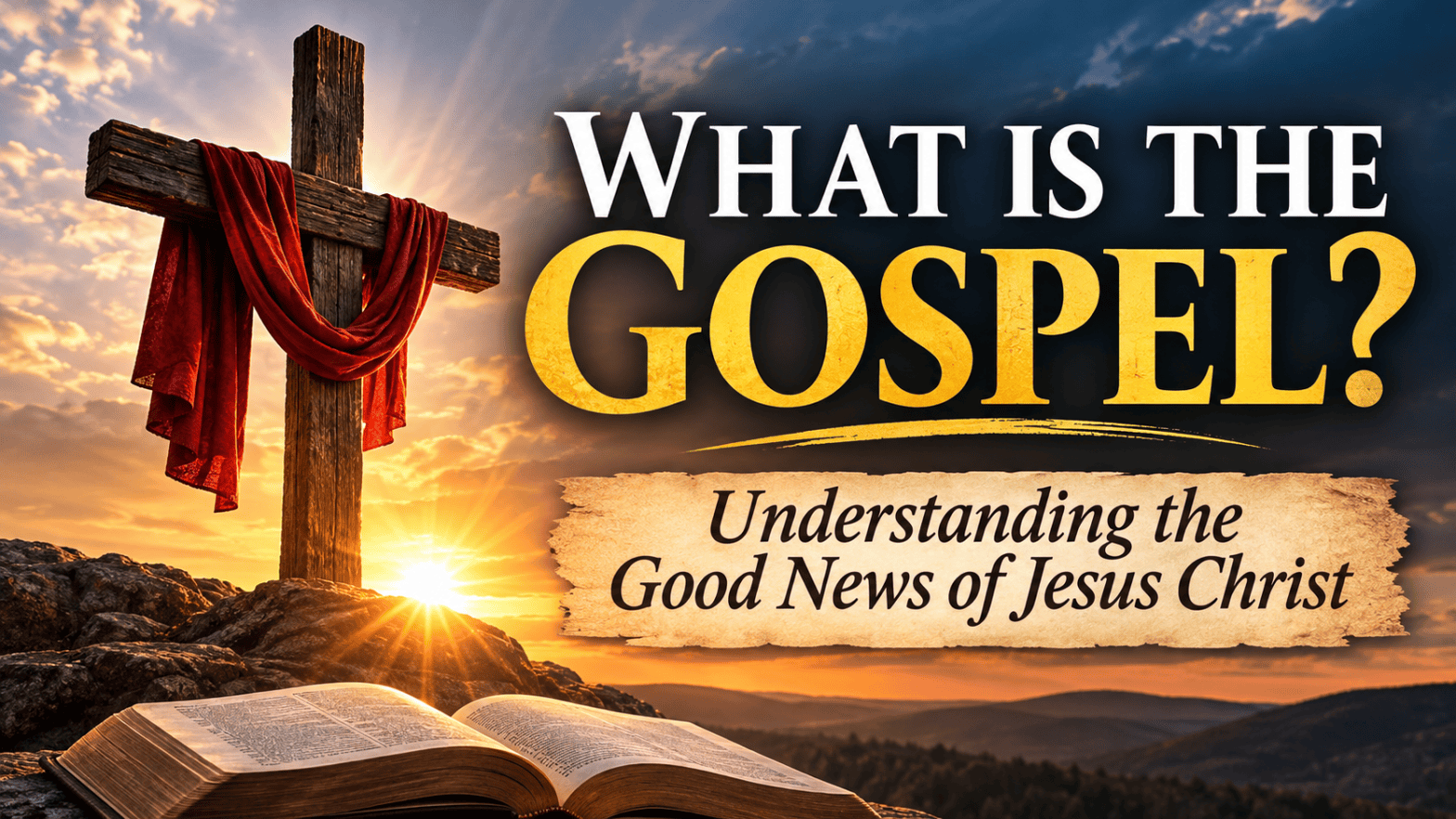
The word gospel is one of the most important words in Christianity.
It’s a word we hear in sermons, read throughout Scripture, and use when sharing our faith with others. The word itself means good news.
But the gospel is more than a religious message or a collection of teachings. It’s the announcement of what God has done through Jesus Christ to save sinners and bring us back into a relationship with Him.
At the heart of Christianity is not simply a set of rules to follow or a lifestyle to maintain. It’s a person: Jesus Christ, the Son of God, who came into the world to save us.
Understanding the gospel means understanding our need for salvation, God’s love for us, and the incredible work Christ accomplished through His life, death, and resurrection.
1. God Created Us for Himself
The story of the gospel begins with God.
God created the heavens and the earth, and everything in them exists because of Him. Humanity was created in His image (Genesis 1:26–27), with the purpose of knowing Him, loving Him, and living in fellowship with Him.
God’s original creation was good. There was no sin, suffering, or death.
We were never created to be independent of God or to establish our own definition of right and wrong. We were created to glorify Him and find our ultimate purpose in Him.
However, humanity’s relationship with God did not remain as it was.
2. Sin Separated Us from God
In Genesis 3, Adam and Eve disobeyed God’s command. Through their rebellion, sin entered the world, bringing death and separation from God.
Sin is more than making mistakes or occasionally doing something wrong. It’s a rebellion against our Creator, falling short of His holiness and righteousness.
Romans 3:23 tells us:
for all have sinned and fall short of the glory of God, (Romans 3:23, ESV)
This means that every one of us has a problem we cannot solve through our own efforts. Regardless of how good we believe ourselves to be, none of us measures up to God’s perfect standard.
Our good deeds cannot erase our sins, and religious activity cannot make us righteous before a Holy God. Scripture also tells us that the wages of sin is death (Romans 6:23). Sin carries a real consequence, and humanity stands in need of a Savior.
This is an uncomfortable truth, but it’s an important one. We cannot fully appreciate the good news of salvation without first recognizing the seriousness of the problem from which we need to be saved.
3. God Provided the Way of Salvation Through Jesus Christ
Here is where the good news begins to shine.
Despite humanity’s rebellion, God did not abandon us. Out of His love and mercy, He provided a way for sinners to be reconciled to Him.
John 3:16 beautifully expresses this truth:
“For God so loved the world, that he gave his only Son, that whoever believes in him should not perish but have eternal life. (John 3:16, ESV)
Jesus Christ, the eternal Son of God, took on human flesh and entered our world. He lived a sinless life, perfectly fulfilling the righteousness that we could never achieve on our own.
He taught the truth, demonstrated God’s compassion, healed the sick, and called people to repentance and faith. Yet His mission was always leading toward the cross.
Jesus willingly gave His life as a sacrifice for our sins. He took upon Himself the punishment that we deserved, offering Himself in our place.
As Isaiah 53:5 says:
But he was pierced for our transgressions; he was crushed for our iniquities; upon him was the chastisement that brought us peace, and with his wounds we are healed. (Isaiah 53:5, ESV)
At the cross, Jesus accomplished what we could never accomplish for ourselves. He bore our sins, satisfied the demands of divine justice, and made reconciliation with God possible.
His death was not an accident or a tragic interruption of His ministry. It was central to God’s plan of redemption.
4. Jesus Rose from the Dead
The gospel does not end at the cross.
On the third day, Jesus physically rose from the dead, defeating sin and death. The resurrection is not simply an encouraging symbol of hope. It’s a historical and foundational claim of Christianity.
The Apostle Paul explains the importance of this in 1 Corinthians 15:3–4:
3 For I delivered to you as of first importance what I also received: that Christ died for our sins in accordance with the Scriptures, 4 that he was buried, that he was raised on the third day in accordance with the Scriptures (1 Corinthians 15:3–4, ESV)
The resurrection confirms that Jesus is who He claimed to be and that His sacrifice was victorious. Death could not hold Him.
Because Jesus lives, those who belong to Him have the promise of forgiveness, reconciliation with God, and everlasting life.
Without the resurrection, Christianity loses its foundation. Paul even writes that if Christ has not been raised, our faith is futile (1 Corinthians 15:17).
Thankfully, Christ has been raised, and that’s the good news we proclaim.
5. Salvation Is Received Through Repentance and Faith
The salvation Jesus accomplished is not something we earn. It’s a free gift of God’s grace, received through faith.
Ephesians 2:8–9 explains:
8 For by grace you have been saved through faith. And this is not your own doing; it is the gift of God, 9 not a result of works, so that no one may boast. (Ephesians 2:8–9, ESV)
We are not saved because we have lived good enough lives, attended enough church services, or performed enough religious activities. We are saved because of what Christ has done.
Our response to the gospel involves repentance and faith.
Repentance means turning away from sin and turning toward God. It involves a genuine change of heart and direction, recognizing our sin and no longer wanting to live in rebellion against our Creator.
Faith means trusting in Jesus Christ, relying on Him and His finished work for our salvation. It’s more than simply believing that Jesus existed. It means placing our confidence in Him as Lord and Savior.
These are not competing requirements that we use to earn God’s favor. They are the proper response to the grace God has freely offered through Christ.
When we come to Him in faith, we are forgiven, justified, and brought into a restored relationship with God.
6. The Gospel Changes the Way We Live
Receiving the gospel is not simply agreeing with a collection of Christian beliefs. It marks the beginning of a new life in Christ.
Those who belong to Jesus are called to grow in holiness, love their neighbors, forgive others, resist sin, and follow the teachings of Christ.
This process is known as sanctification. It’s the ongoing work of God’s grace in transforming believers to become more like Jesus.
Though we will not become perfect—Christians still struggle, stumble, and need God’s forgiveness and guidance—our lives should increasingly reflect the One we have placed our trust in.
As Paul writes in 2 Corinthians 5:17:
Therefore, if anyone is in Christ, he is a new creation. The old has passed away; behold, the new has come. (2 Corinthians 5:17, ESV)
Good works do not purchase our salvation. Rather, they are the fruit of a life that has been transformed by God’s grace.
We obey God—not to earn His love—but because we have received His love and desire to live in a way that honors Him.
The Good News Is for Everyone
The gospel is not reserved for people who think they have their lives together, have never struggled with sin, or believe they are worthy of God’s forgiveness. We are all sinners, and we all need Jesus.
The gospel is good news for sinners.
Jesus came to save the lost, and His invitation extends to people from every background, nation, and walk of life. No one is beyond the reach of His mercy.
If you have never placed your trust in Jesus Christ, I encourage you to turn to Him. Acknowledge your sin, repent, and put your faith in Him. Trust in His death and resurrection rather than your own efforts to make yourself right with God.
And if you already belong to Christ, never lose sight of the incredible grace you have received. Let the gospel continually shape your heart, your relationships, your decisions, and the way you treat others.
The gospel is the good news that Jesus Christ died for our sins, was buried, and rose again. Through Him, forgiveness is available, sinners can be reconciled to God, and eternal life is promised to all who belong to Him.
That is the good news of Jesus Christ. That is the gospel.

Click the Image to
Get Your FREE Christian Apologetic Starter Pack
Study the Bible Deeper
• If you’re serious about growing in your understanding of Scripture, I highly encourage you to try Logos Bible Software—you can start with a free trial and see how it transforms your study time. — FREE TRIAL
• And for solid, biblically sound books and resources, take a look at ChristianBook.com—a great place to build your library. — CLICK HERE
Discover more from Mathetes Mission
Subscribe to get the latest posts sent to your email.


