Why Christians must defend the lives of the most vulnerable among us.
Abortion is one of the most serious moral issues of our time. At its heart lies a fundamental question: When does human life deserve protection, and who has the authority to determine its value?
As Christians, we believe that human life is not valuable because of its size, abilities, independence, or stage of development. Human beings possess inherent value because they are created in the image of God. This includes the unborn child, who cannot speak, defend themselves, or plead for their own life.
If we believe that every human being is made in God’s image, then we must not treat the destruction of innocent human life as morally insignificant simply because that life has not yet been passed through the birth canal.
1. Every Human Life Is Made in the Image of God
The foundation of the Christian position on abortion begins in Genesis:
So God created man in his own image, in the image of God he created him; male and female he created them. (Genesis 1:27, ESV)
Human value does not originate from society, government, personal preference, or individual ability. It originates with God Himself.
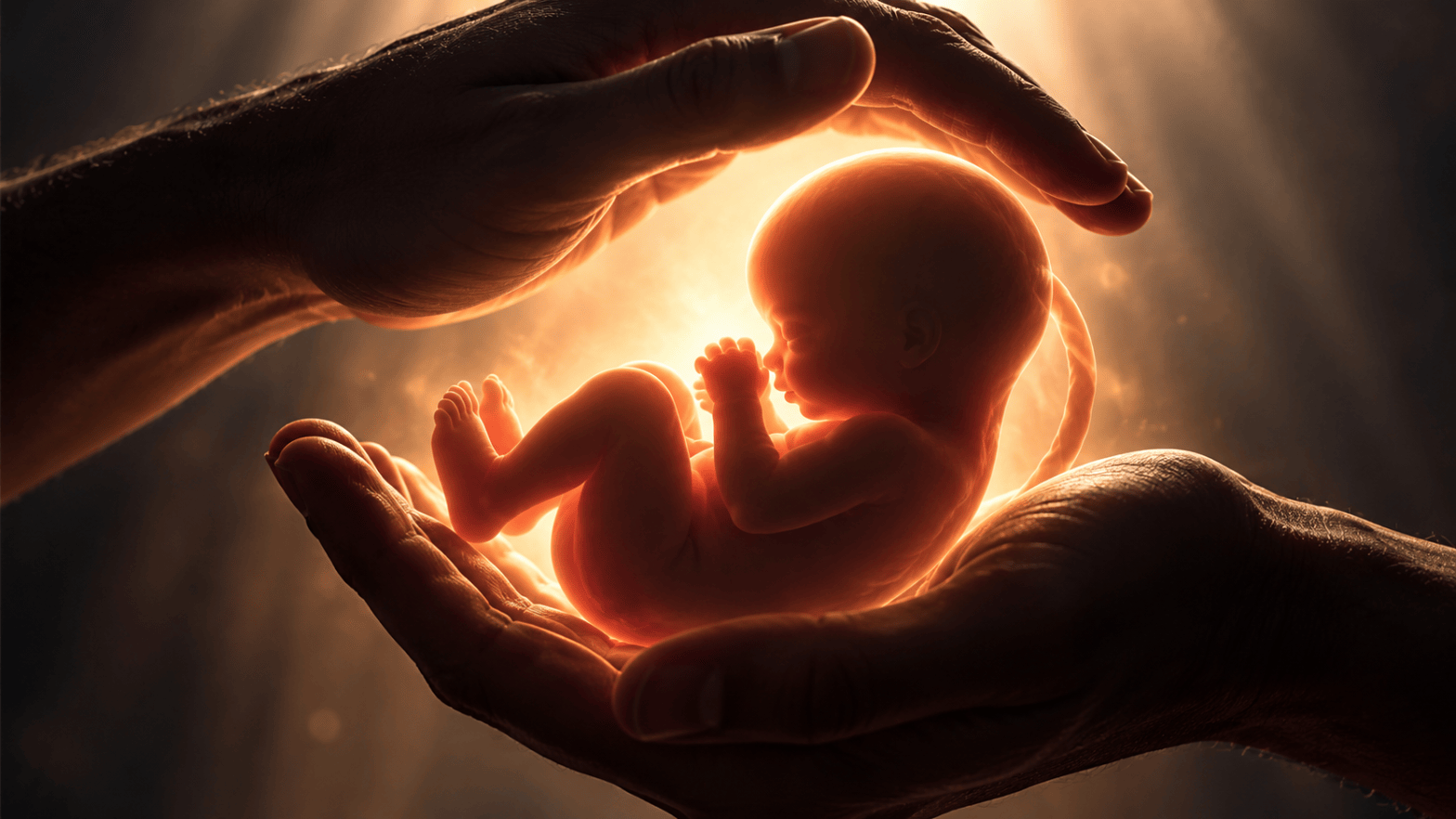
An unborn child does not become valuable at birth. Birth changes the child’s location, not his humanity. The same developing human being who exists in the womb continues to exist outside it.
David writes:
For you formed my inward parts; you knitted me together in my mother’s womb. (Psalm 139:13, ESV)
David describes God as actively involved in the formation of human life before birth. The womb is not a place where something without value exists until it becomes a person. It is where a human being develops, known and formed under God’s sovereign hand.
Jeremiah 1:5 likewise declares:
“Before I formed you in the womb I knew you, and before you were born I consecrated you; I appointed you a prophet to the nations.” (Jeremiah 1:5, ESV)
Although this passage specifically concerns God’s calling of Jeremiah, it demonstrates that God’s purposes for a person precedes birth.
The biblical picture is clear: life in the womb is not outside God’s knowledge, care, or purposes.
2. What Happens During an Abortion?
One of the disturbing realities of abortion is that the procedures used to end a pregnancy can vary significantly depending on how far the pregnancy has progressed.
Understanding these differences matters because abortion is not one single medical procedure.
Early pregnancy: Medication abortion commonly uses mifepristone followed by misoprostol. These medications end the pregnancy and cause the uterus to expel the unborn baby and pregnancy tissue. Another common method is vacuum aspiration, in which suction vacuums out the unborn baby and pregnancy tissue from the uterus.
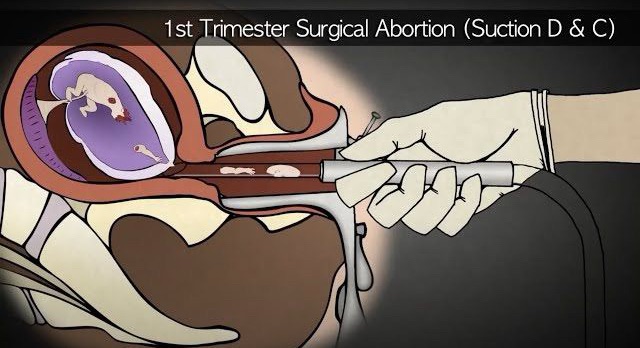
First trimester and early second trimester (1-13 weeks): Suction procedures may be used, depending on gestational age and clinical circumstances. The pregnancy is ended, and the developing baby is removed from the uterus.
Second trimester (14-27 weeks): Dilation and evacuation (D&E) is a commonly used surgical method. The cervix is dilated, and the physician removes the little unprotected baby piece by piece using surgical instruments and suction. The procedure becomes more complex as pregnancy advances.
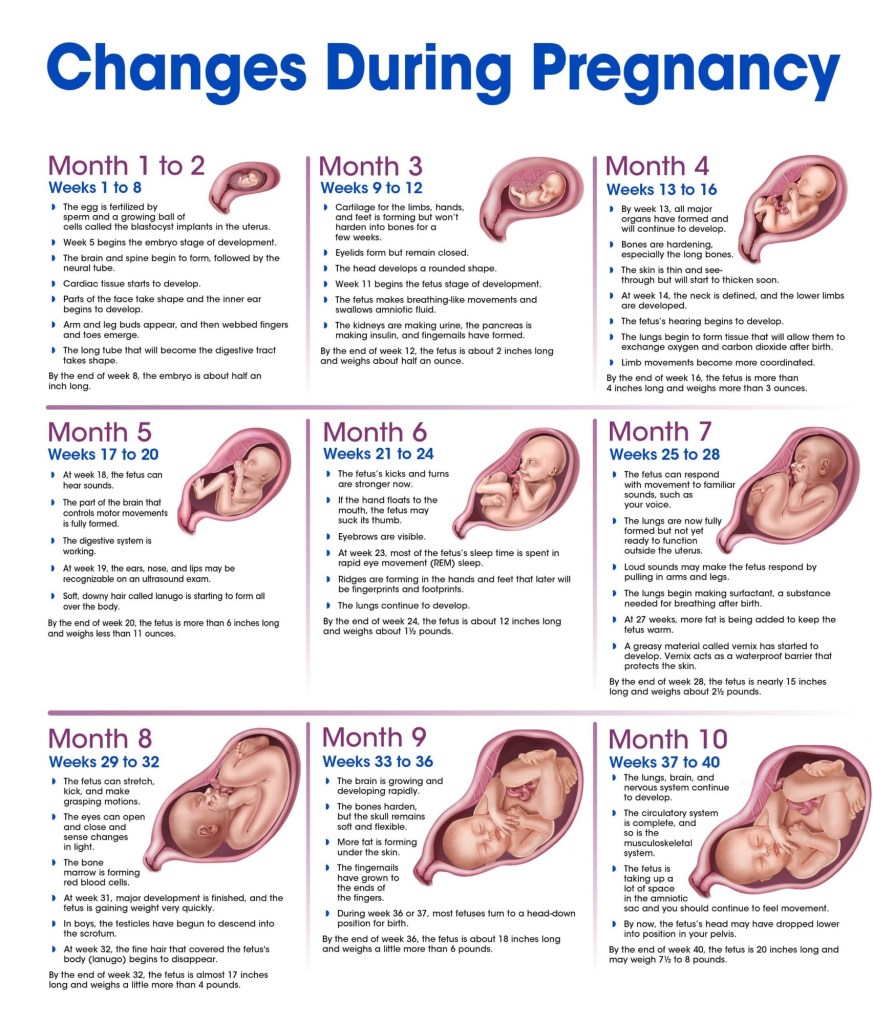
During the second trimester, babies make spontaneous movements, flex their limbs, move their heads, and change position. Ultrasound can capture some of these movements during medical procedures, including abortion procedures, and ends up showing us the unborn baby squirming for its life as they’re torn apart limb by limb.
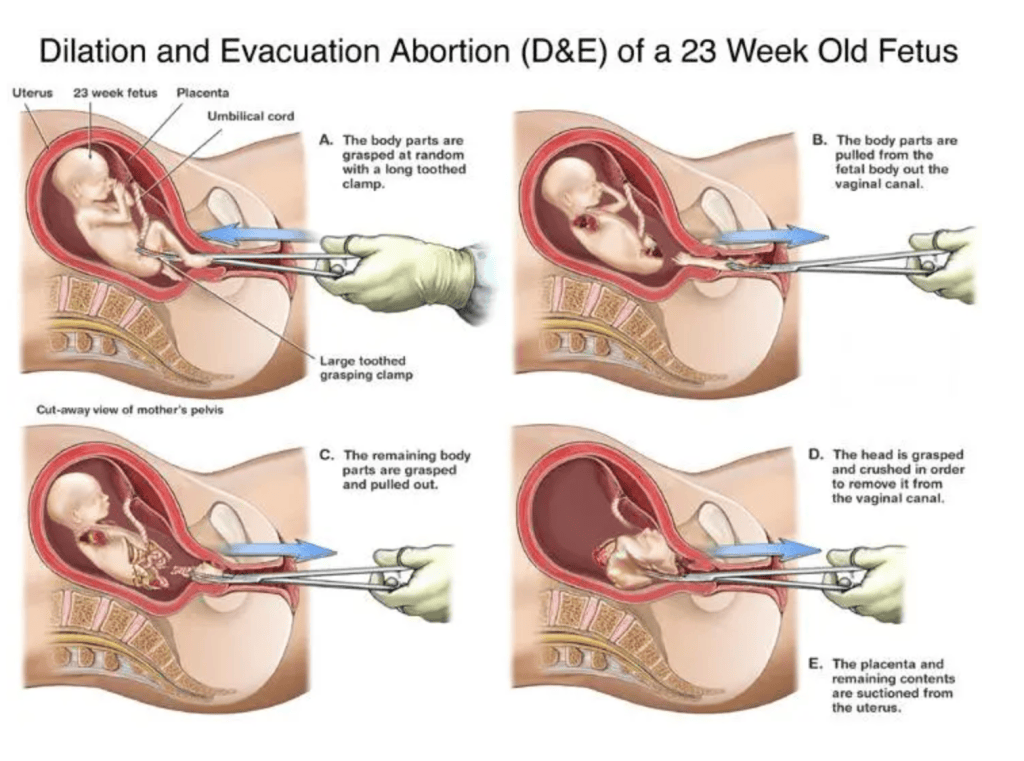
Later pregnancy: Abortions later in pregnancy are less common and may involve induction of labor or surgical procedures, depending on gestational age, medical circumstances, and applicable law. Some involve medications that stop fetal cardiac activity before the pregnancy is ended.
Allow me to stop here, briefly, and ask you a question: How is this not murder? What if you were torn apart limb by limb simply for someone else’s convenience and desires with nobody protecting you?
These descriptions illustrate an uncomfortable reality: abortion kills a developing human life in some terribly gruesome ways, that most people are never aware of.
The moral question, is not simply whether a procedure is early or late. It is whether an innocent human life should intentionally and purposely be horrifically killed.
The fact that a baby is smaller, less developed, or entirely dependent upon another person does not establish that the child’s life has less worth.
3. Does the Bible Condemn the Taking of Innocent Life?
The sixth commandment states:
“You shall not murder. (Exodus 20:13, ESV)
God places enormous importance on human life. Scripture repeatedly condemns the shedding of innocent blood and teaches that human beings must answer to their Creator for how they treat others.
Proverbs 6:16–17 lists among the things the Lord hates “hands that shed innocent blood.”
Christians should therefore take seriously the moral implications of intentionally ending an innocent human life.
When those teachings are considered together, the pro-life conclusion is that unborn human beings deserve protection rather than intentional destruction.
4. The Unborn Are Among the Most Vulnerable Human Beings
Consider the position of an unborn child.
They cannot choose their circumstances. They cannot provide for themselves. They cannot speak in a courtroom, vote in an election, or ask society to protect them. Their entire existence depends upon the care from us adults, that God has made clear what is right and what is wrong.
Dependency does not eliminate human worth.
- A newborn is dependent.
- A severely disabled person may depend upon others throughout life.
- An elderly person may require extensive assistance.
We do not conclude that these individuals lose their right to live because they cannot survive independently…
Why, then, should dependence mean that the unborn child’s life has no claim to protection?
Pregnancy does involve a unique physical burden that these comparisons do not fully capture. A serious pro-life ethic must acknowledge the mother’s health, and dignity while also recognizing the unborn child’s humanity, worth, and value.
Protecting unborn life should mean more than opposing abortion. It should also mean supporting pregnant women, helping families in crisis, encouraging fathers to accept responsibility, providing practical assistance, and caring for children after birth.
A society that claims to value life should be willing to help sustain it.
5. Christians Must Speak the Truth With Both Conviction and Compassion
It is possible to believe abortion is morally wrong without treating people who have experienced it as enemies.
Some women face abandonment, poverty, abuse, coercion, fear, or devastating medical circumstances. Others carry deep regret and grief at an unfathomable level. These realities deserve to be taken seriously.
The Christian response must not be indifference, cruelty, or self-righteousness.
Jesus demonstrated compassion toward sinners while never treating sin as something inconsequential. Christians should follow that example: speak truthfully, defend the vulnerable, offer practical help, and point people toward the mercy of God.
For those who have had abortions, the gospel offers hope. No sin is beyond the reach of Christ’s saving grace for those who repent and trust in Him. The church should be a place where people can find both biblical truth and genuine restoration.
We must never allow our defense of unborn children to become an excuse for despising their mothers.
Human Life Is Not Ours to Devalue
The abortion debate ultimately forces us to confront a question of human dignity.
Does the value of a human being depend upon age, development, ability, convenience, or whether another person wants that life to continue?
The Christian answer should be no.
Genesis 1:27 teaches that human beings are made in God’s image. Psalm 139:13–16 portrays God as knowing and forming human life in the womb. Proverbs 6:17 condemns the shedding of innocent blood. Together, these passages provide a substantial biblical foundation for protecting unborn human life.
The unborn, unprotected, little baby girl—or boy—is not less human because they are small, they’re not less valuable because they’re dependent, or less deserving of protection because they cannot speak for themselves.
Every human life bears a dignity that we did not create and therefore we have no right to kill or murder them.
Christians should stand for the unborn, support mothers in difficult circumstances, care for children and families, and proclaim the gospel with both courage and compassion.
If human life is a gift from God, then protecting the vulnerable is not merely a political position. It is a moral responsibility.
Open your mouth for the mute, for the rights of all who are destitute. Open your mouth, judge righteously, defend the rights of the poor and needy. (Proverbs 31:8–9, ESV)
Find your States abortion laws here: https://reproductiverights.org/maps/abortion-laws-by-state/
~~~ PRAY TO END ABORTION ~~~
Discover more from Mathetes Mission
Subscribe to get the latest posts sent to your email.


