
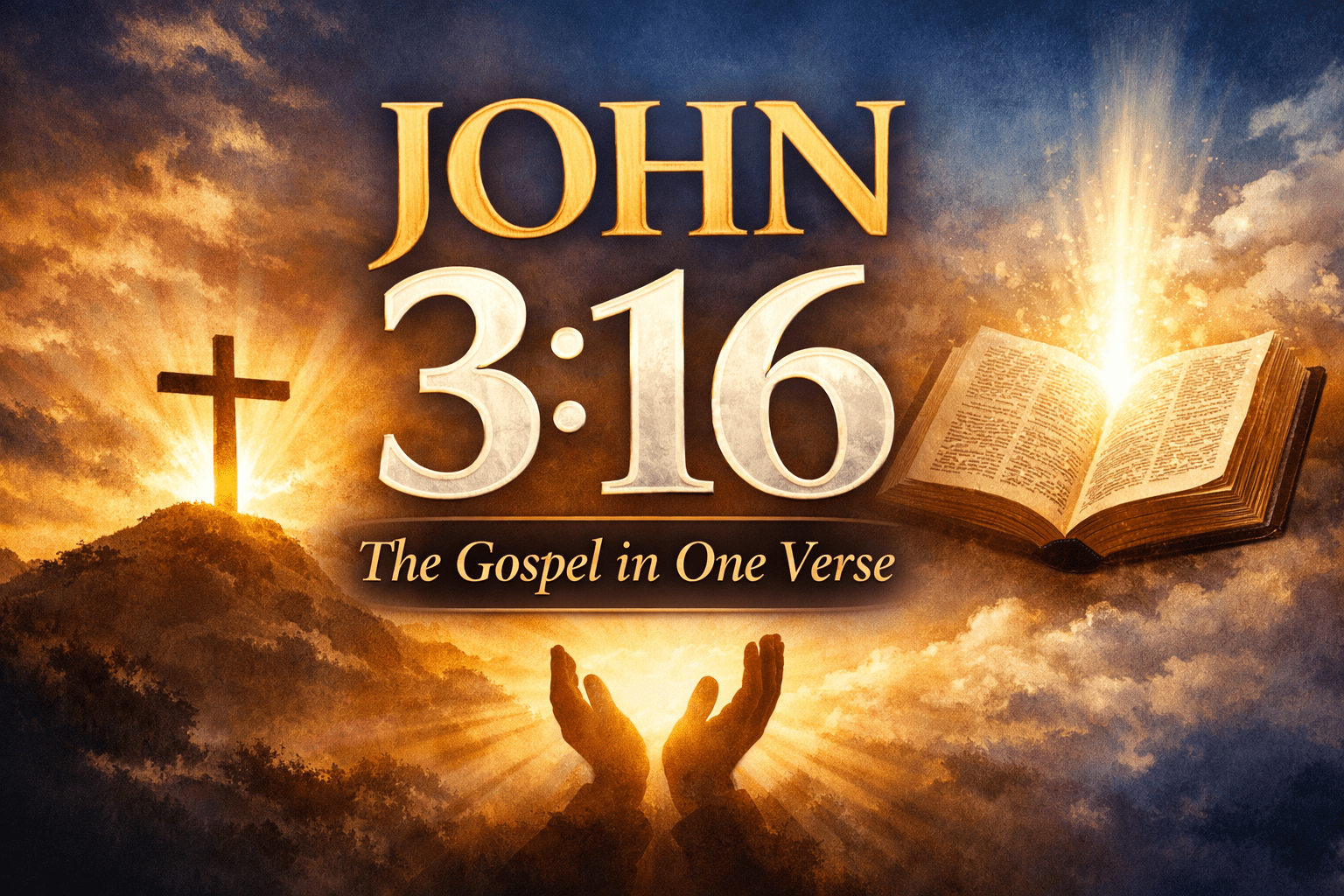
“For God so loved the world, that he gave his only Son, that whoever believes in him should not perish but have eternal life. (John 3:16, ESV)
This is not a sentimental verse, it’s a compressed declaration of the entire Christian worldview.
To understand it properly, we have to read it in context.
1. The Setting: A Religious Insider in the Dark
Jesus is speaking to Nicodemus, a Pharisee, a member of the Sanhedrin, a “teacher of Israel.” If anyone should have understood God, it was him.
Yet Jesus tells him he must be “born again.”
That alone is radical.
It means:
• Religious knowledge is insufficient.
• Moral effort is insufficient.
• Heritage is insufficient.
Even the best moral insider needs regeneration.
John 3:16 is not aimed at pagans first, it is spoken to a devout religious leader.
2. “For God…”
The verse begins with God as the subject.
Salvation is not humanity climbing upward…
It is God moving downward to humanity!
The Bible consistently portrays redemption as initiated by God. Humanity does not need to seek Him first (Romans 3). He seeks us.
Christianity is not advice about how to reach God.
It is news about how God reached us.
3. “So Loved the World”
This is not a statement about the worthiness of the world.
In John’s Gospel, “the world” often refers to humanity in rebellion against God. The same world that didn’t know Christ (John 1:10). The same world that hates the light (John 3:19).
That is the world God still loves.
• This makes Christian love distinct from sentimentality.
• God’s love is not based on attractiveness.
• It is grounded in His character.
The cross is not God loving good people.
It is God loving sinful people.

4. “That He Gave His Only Son”
Love is defined by giving.
And what is given is not abstract forgiveness, not mere moral instruction… but a Person.
The giving includes:
• Incarnation (God entering history)
• Substitution (bearing our sin)
• Crucifixion (public execution)
• Resurrection (vindication and victory)
This is not mythology…
It is a historical claim!
Christianity stands or falls on whether God actually acted in time and space.
5. “Whoever Believes”
The invitation is wide.
The condition is clear.
Belief in John’s Gospel is not intellectual agreement alone.
• It is trust.
• Reliance.
• Personal commitment.
Similar to the way people will “believe in” a parachute by jumping with it.
This excludes both:
– Universalism (everyone is saved regardless of response)
– Legalism (you save yourself through works)
Salvation is received, not achieved.
6. “Shall Not Perish”
This verse assumes something modern culture resists: real judgment.
If no one is perishing, there is nothing to rescue from.
Jesus speaks more about judgment than almost anyone in Scripture. The cross only makes sense if the human condition is serious.
Christianity does not flatter human autonomy.
It diagnoses moral rebellion.
7. “But Have Eternal Life”
Eternal life is not merely endless existence.
Biblically, it means:
• Reconciliation with God
• Restoration of relationship
• Participation in the life God intended
• Resurrection hope
It begins now and culminates in the age to come.
Christianity is not merely about avoiding hell…
It is about entering life.
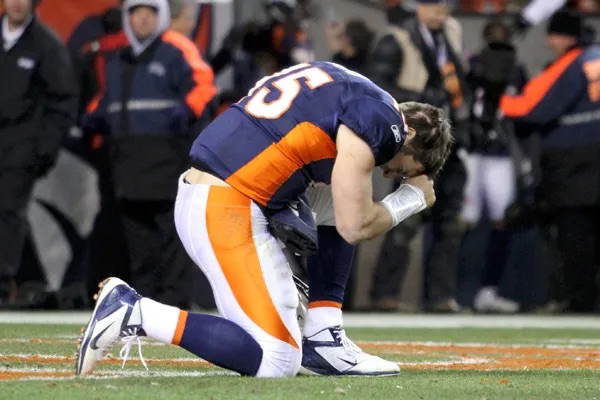
8. Tim Tebow and the “3:16” Moment
Tim Tebow made John 3:16 visible to millions in a uniquely modern way.
In the 2009 BCS National Championship, he wore “John 3:16” in his eye black.
After the game, it was reported that roughly 90 million people Googled the verse within 24 hours.
Then in 2012, exactly 3 years later, during an NFL playoff game, there was some interesting stats:
• 316 passing yards by Tebow
• 31.6 yards per completion by Tebow
• 3:16 time of possession in overtime
• Opponent: 316 total yards
Whether one interprets that as providential symmetry or statistical coincidence, one fact is undeniable…
Millions, who had never attended church, looked up a Bible verse!
And what they found was the gospel.
God has always used unexpected platforms; Roman roads, printing presses, radio, television, even football games apparently!
9. Apologetic Strength of John 3:16
This single verse answers core worldview questions:
• Who is God?
Personal. Loving. Active.
• What is wrong with humanity?
We are perishing apart from intervention.
• What has God done?
He gave His Son in history.
• What must we do?
Believe.
• What is the outcome?
Eternal life or death.
It is morally serious,
Historically grounded,
Theologically coherent,
Existentially relevant!
10. Why This Verse Still Moves People
John 3:16 is powerful because it confronts both pride and despair.
To the proud: You cannot save yourself.
To the despairing: You are loved more than you know.
It dismantles both self-righteousness and hopelessness in the same breath.
That is why it endures.
Study the Bible Deeper
• If you’re serious about growing in your understanding of Scripture, I highly encourage you to try Logos Bible Software—you can start with a free trial and see how it transforms your study time. — FREE TRIAL
• And for solid, biblically sound books and resources, take a look at ChristianBook.com—a great place to build your library. — CLICK HERE
Discover more from Mathetes Mission
Subscribe to get the latest posts sent to your email.

 Mathetes Mission
I love this, Brodie. Praise the Lord for the clarity of this verse, and for the truth that it proclaims. Good stuff!
LikeLiked by 1 person
Thank you, Pastor Ben! 🫶
LikeLike