Every year, Christians around the world pause to remember two days that sit at the very heart of the gospel: Good Friday and Easter Sunday.
These are not simply religious holidays or cultural traditions.
Together, they tell the story of humanity’s greatest problem and God’s greatest act of love.
To understand Christianity, you must understand these two days.
Why It’s Called “Good” Friday
At first glance, the name seems strange.
Good Friday marks the crucifixion and death of Jesus Christ… an event filled with betrayal, injustice, suffering, and grief.
From a human perspective, it looks like tragedy.
Yet Christians call it good because of what the cross accomplished.
The Problem the Cross Solves
The Bible teaches that humanity’s deepest problem is sin, not merely bad behavior, but a condition of rebellion against God. Sin separates people from a Holy God and brings spiritual death.
Scripture describes this plainly:
- for all have sinned and fall short of the glory of God, (Romans 3:23)
- For the wages of sin is death, but the free gift of God is eternal life in Christ Jesus our Lord. (Romans 6:23)
If God is perfectly just, sin cannot simply be ignored. Justice demands payment. But if God is perfectly loving, He desires to save.
Good Friday is where justice and love meet.
The Meaning of the Cross
Jesus’ crucifixion was not an accident or a tragic failure. It was the fulfillment of God’s rescue plan.
Jesus lived the sinless life humanity failed to live, then willingly took the punishment humanity deserved.
On the cross, He acted as a substitute… bearing sin in place of sinners.
This is often called atonement or substitution.
Isaiah foretold this centuries earlier:
But he was pierced for our transgressions; he was crushed for our iniquities; upon him was the chastisement that brought us peace, and with his wounds we are healed. (Isaiah 53:5)
On the cross, Jesus cried, “It is finished.” This was not a cry of defeat but of completion. The debt of sin had been paid in full.
Good Friday is good because forgiveness became possible.
The Silence of Saturday
Between Good Friday and Easter Sunday lies a quiet day often overlooked: Holy Saturday.
For Jesus’ followers, this day was filled with confusion, grief, and fear.
– Their teacher was dead.
– Their hopes seemed crushed.
– The Messiah they trusted had been executed.
This silence reminds believers of an important truth: God often works even when He seems silent.
But the story wasn’t over…
Easter Sunday: The Victory of Resurrection
If the story ended at the cross, Christianity would be a story of noble sacrifice, but not salvation.
Easter is what changes everything.
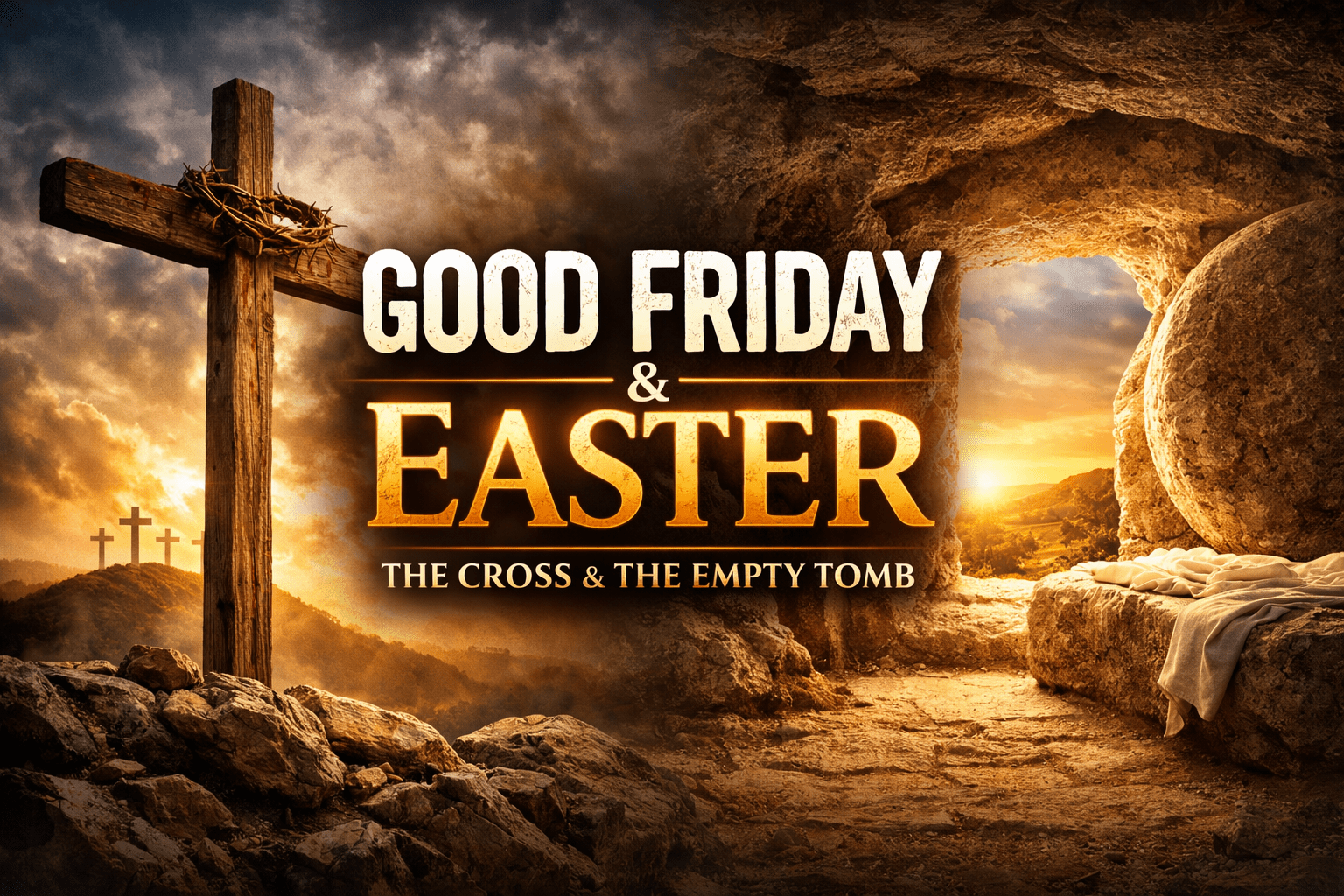
On the third day, the tomb was empty.
Jesus physically rose from the dead.
The resurrection is not treated as metaphor or symbolism in the New Testament. It is presented as a real historical event witnessed by many.
The resurrection is the cornerstone of the Christian faith because it confirms three world-changing truths.
What the Resurrection Proves
1. Jesus Is Who He Claimed to Be
Throughout His ministry, Jesus made astonishing claims about His identity and authority. The resurrection vindicates those claims.
Rising from the dead demonstrates divine authority over life and death, something no mere teacher or prophet could claim.
2. The Payment for Sin Was Accepted
If Good Friday is the payment, Easter is the receipt.
The resurrection shows that the sacrifice of Jesus was sufficient. Sin and death did not win. The penalty was fully satisfied.
3. Death Is Not the End
The resurrection isn’t only about Jesus, it’s a promise for believers.
Christ rose, those who trust in Him will also be raised to eternal life.
John’s Gospel summarizes this hope:
Yet a little while and the world will see me no more, but you will see me. Because I live, you also will live. (John 14:19)
Easter turns the greatest human fear—death—into a doorway to life.
The Cross and the Empty Tomb Belong Together
Good Friday and Easter Sunday cannot be separated. Each explains the other.
- Without the cross, the resurrection has no saving purpose.
- Without the resurrection, the cross has no victorious outcome.
Together they form the core message of Christianity:
Jesus died for sins and rose again to bring new life.
Why This Still Matters Today
These events are not merely historical reflections. They invite a personal response.
The message of Good Friday and Easter confronts every person with a question: What will you do with Jesus?
The message isn’t about earning salvation through good works. It’s about receiving a gift made possible through Christ’s death and resurrection.
- Grace replaces striving.
- Hope replaces fear.
- Life replaces death.
The Heart of the Gospel
In its simplest form, the message of these two days can be summarized:
- Humanity is lost in sin.
- Jesus died to pay the penalty.
- Jesus rose to defeat death.
- Forgiveness and eternal life are offered to all who trust in Him.
This is why Christians celebrate.
This is why churches gather.
This is why Good Friday is good and Easter is joyful.
Because the story of these days ends not with a sealed tomb… but with an empty one.
Study the Bible Deeper
• If you’re serious about growing in your understanding of Scripture, I highly encourage you to try Logos Bible Software—you can start with a free trial and see how it transforms your study time. — FREE TRIAL
• And for solid, biblically sound books and resources, take a look at ChristianBook.com—a great place to build your library. — CLICK HERE
Discover more from Mathetes Mission
Subscribe to get the latest posts sent to your email.

 Mathetes Mission