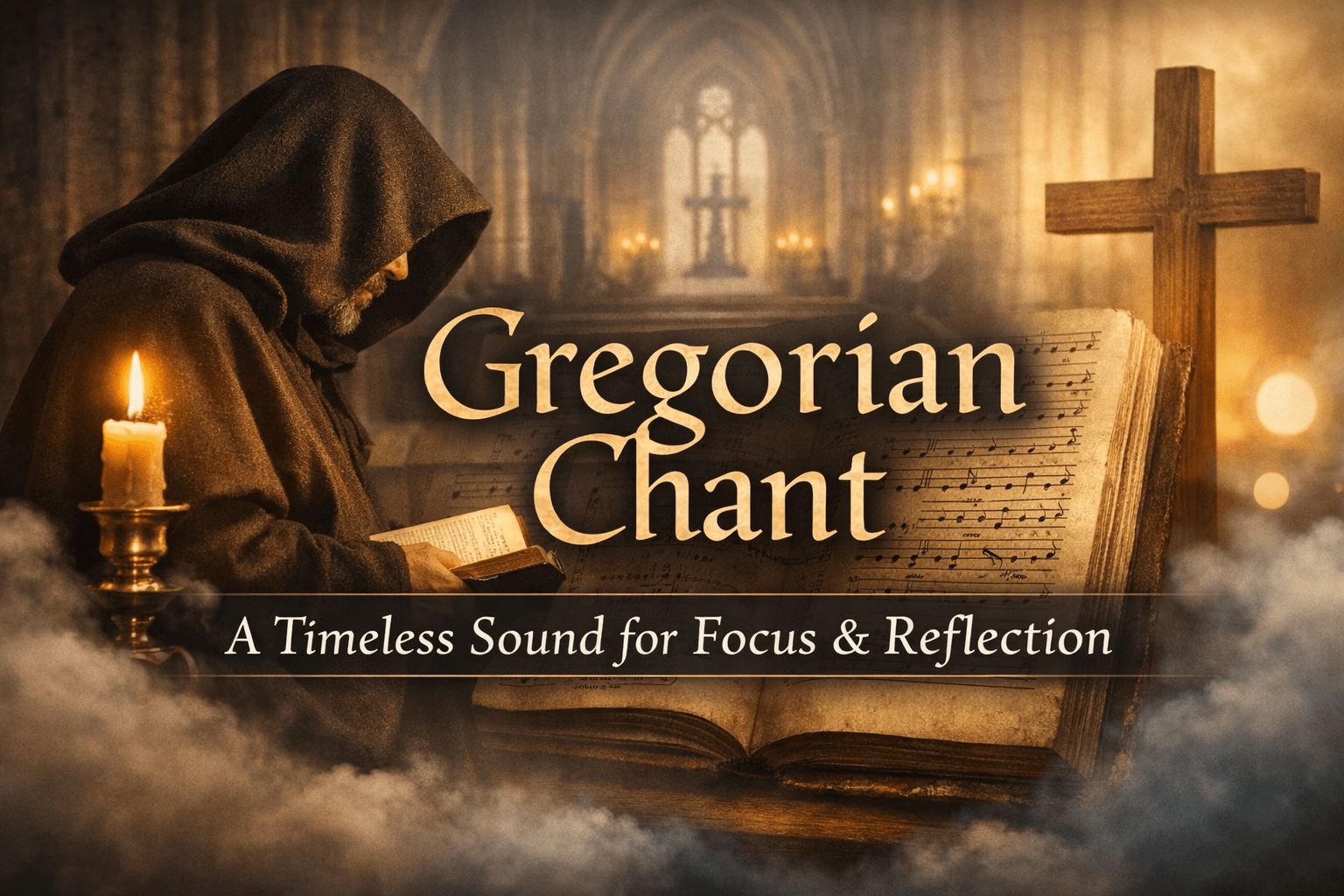
If you’ve ever heard a single, flowing line of voices echoing through a cathedral-like soundscape, you’ve likely encountered Gregorian chant. (the Halo Theme Song is a popular example for you Millennials, LOL!)
Its simplicity feels timeless, its tone reverent, and its atmosphere almost otherworldly. Even today, many Christians (including non-Catholics) find it deeply helpful for focus, prayer, and reflection.
Below is a clear look at its origins, purpose, and fascinating details, along with why you may naturally gravitate toward it while working or studying.
Origin of Gregorian Chant
Gregorian chant developed in the early medieval church, roughly between the 6th and 9th centuries. It’s traditionally associated with Pope Gregory I (Gregory the Great), though historians agree he didn’t compose the chants himself. Instead, his leadership helped standardize liturgical worship across Western Europe.
Key historical influences:
• Rooted in Jewish synagogue chant traditions
• Influenced by early Christian worship in Rome
• Shaped by monastic communities preserving Scripture through song
• Standardized under the Carolingian Empire for unity in worship
Before printing presses and widespread literacy, singing Scripture ensured theological consistency and memorization.
What Gregorian Chant Is
Gregorian chant is:
• Monophonic — one melodic line, no harmony
• Unaccompanied — sung without many instruments, if any
• Free rhythm — follows the natural flow of Latin text
• Scripture-centered — many chants are direct biblical texts
Because it lacks rhythmic complexity and instrumental layering, the mind can settle into a calm and attentive state.
Purpose of Gregorian Chant
The chant tradition was designed to serve worship and spiritual formation.
1. Proclaiming Scripture
Many chants are drawn directly from Psalms and biblical passages, allowing worshippers to “pray the Word.”
2. Encouraging Reverence
The slow meditative tone encourages humility and awe before God.
3. Aiding Memorization
Melody helps Scripture remain in memory. Crucial back then in a largely illiterate society.
4. Promoting Contemplation
The absence of musical distraction creates space for reflection and prayer.
Fascinating Facts About Gregorian Chant
• It shaped Western music.
Modern musical notation developed from neumes (early chant notation marks)
• It influenced classical composers.
Composers like Johann Sebastian Bach and Wolfgang Amadeus Mozart inherited traditions built on chant foundations.
• It can lower stress and heart rate.
Studies suggest its slow cadence can calm breathing and improve concentration.
Why It Works So Well in the Background
Many people find Gregorian chant ideal for work, reading, or prayer.
Here’s why:
• No lyrical distraction
If you don’t speak Latin fluently, the text doesn’t compete for cognitive attention.
• No rhythmic demand
Unlike modern music, it doesn’t pull your focus.
• Promotes calm concentration
The steady vocal flow can reduce mental noise.
• Creates a reverent atmosphere
It subtly encourages a posture of reflection and humility.
• Evokes sacred space
Even at a desk, it can make your environment feel more Holy.
Why You May Even Feel Drawn to It
Gregorian chant is one of Christianity’s oldest surviving musical traditions. A bridge connecting modern believers with centuries of worshippers who sang the Psalms in candlelit chapels and stone monasteries.
Used wisely, it can:
• deepen concentration
• cultivate reverence
• support prayer
• provide a peaceful mental environment
If it helps you think clearly, remain calm, and keep your mind oriented toward God, it can be a valuable tool in your daily life.
Study the Bible Deeper with Logos
If you’re serious about studying Scripture and understanding the original context, tools matter!Logos Bible Software gives you access to powerful study resources (Greek and Hebrew tools, commentaries, cross-references, and thousands of theological works) all in one place.
Whether you’re preparing a Bible study, writing articles, or simply wanting to go deeper in God’s Word, Logos helps bring the historical and biblical context to life and understanding.
Start your free trial of Logos today and explore Scripture with the tools so many scholars and pastors use!
• Start your free trial here: FREE TRIAL
Discover more from Mathetes Mission
Subscribe to get the latest posts sent to your email.

 Mathetes Mission