It’s worth pausing to look back at pieces of history that continue to shape our faith today.
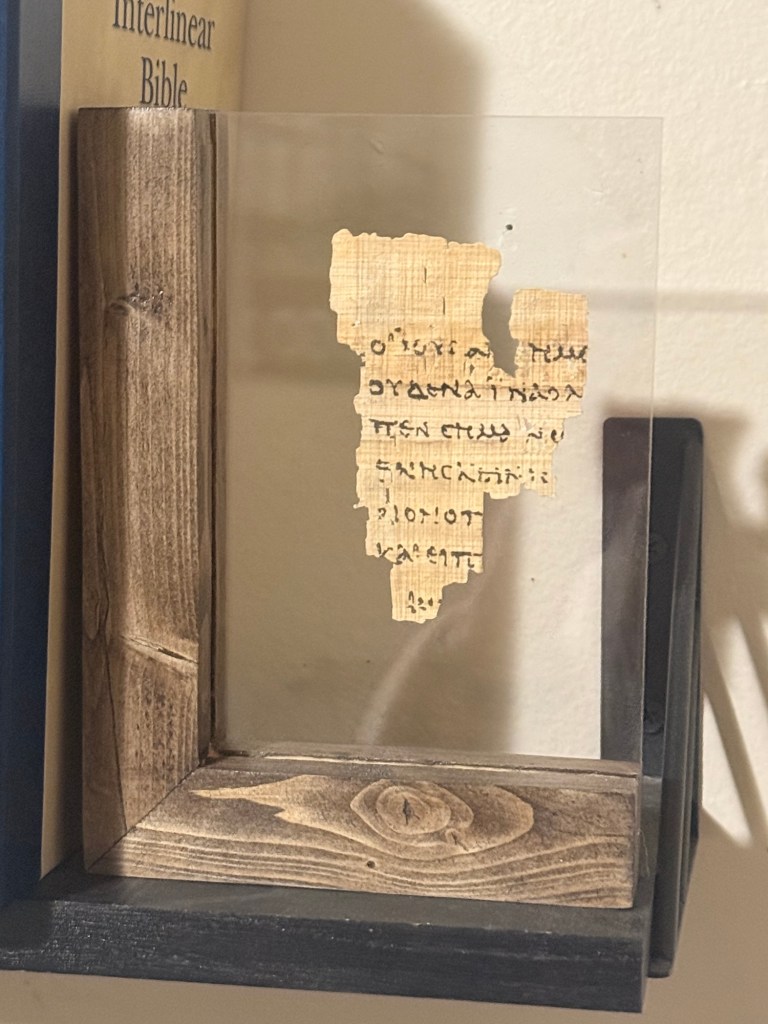
One of the most fascinating artifacts from early Christianity is a scrap of papyrus no bigger than a credit card, yet immensely significant:
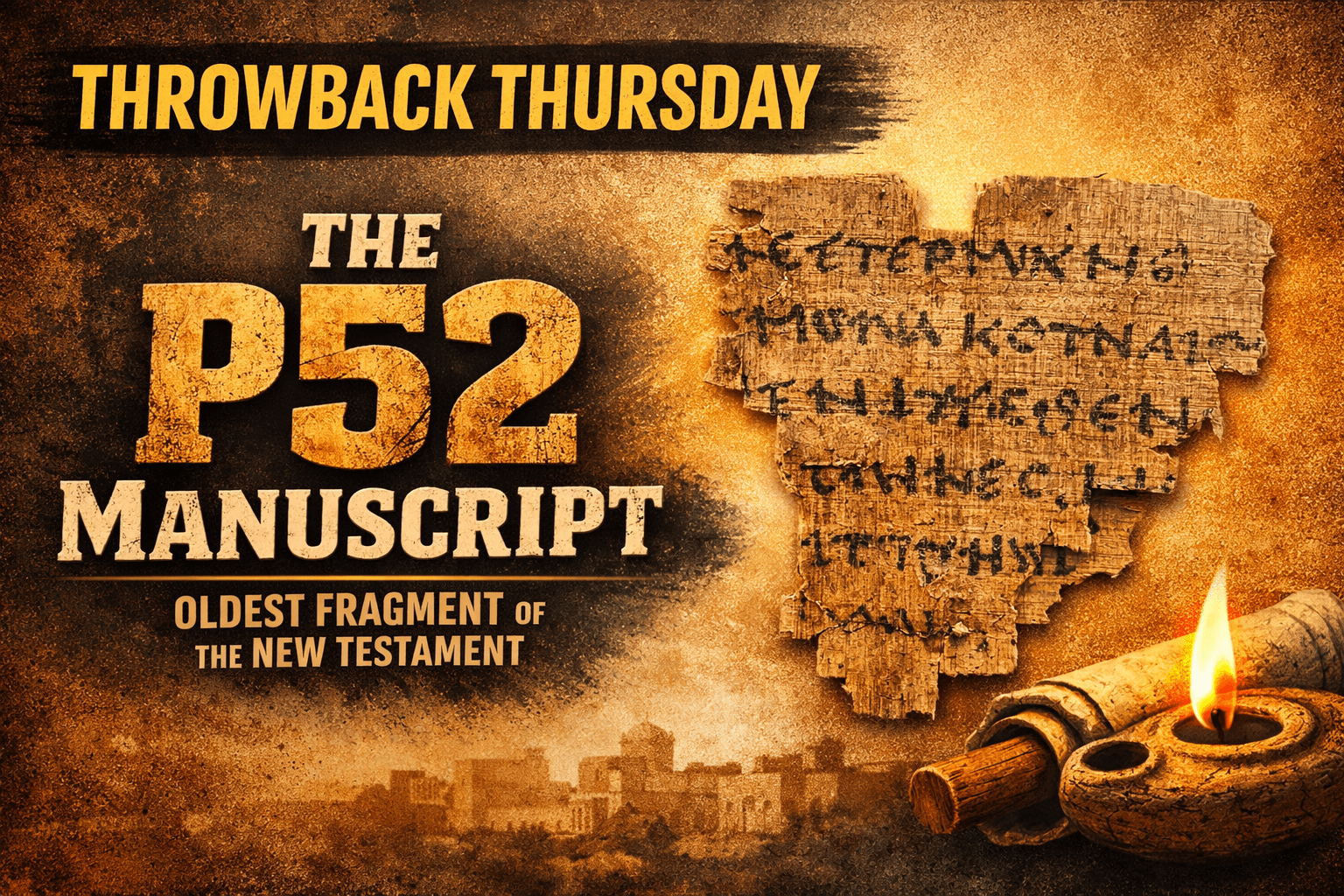
Papyrus 52, or p52.
This small fragment provides powerful evidence for the early circulation and preservation of the New Testament.
What Is P52?
Rylands Library Papyrus P52 is a tiny papyrus fragment containing portions of Gospel of John 18:31–33 on one side and 18:37–38 on the other.
It records part of Jesus’ trial before Pontius Pilate:
“Then Pilate said to him, ‘So you are a king?’ Jesus answered, ‘You say that I am a king. For this purpose I was born and for this purpose I have come into the world—to bear witness to the truth. Everyone who is of the truth listens to my voice.’ Pilate said to him, ‘What is truth?’” — John 18:37–38
Though small, this passage captures a profound moment… the Roman governor questioning the King of Truth.
Discovery and Current Location
P52 was acquired in Egypt in 1920 and later identified and published in 1934 by papyrologist Colin H. Roberts.
Today, it is housed at the John Rylands Library at the University of Manchester.
How Old Is It?
Most scholars date P52 to AD 100–150, with many favoring the early second century.
Why is this important?
John the Apostle likely wrote his Gospel between AD 85–95. P52 demonstrates that John’s Gospel was already being copied and circulated far from its place of origin within decades.
It was found in Egypt, suggesting rapid transmission across the Roman world. This dramatically undercuts claims that the Gospel traditions developed centuries later.
Why P52 Matters for Christian Apologetics
1. Evidence for Early New Testament Transmission
P52 shows that the Gospel of John existed in written form very close to the time of the eyewitness generation.
2. Geographic Spread of Christianity
Because it was found in Egypt, it indicates the Gospel spread quickly beyond Palestine and Asia Minor.
3. Reliability of Scripture
The fragment aligns with later manuscripts, demonstrating consistency in transmission.
4. Confirmation of Gospel Antiquity
Skeptics once argued that the Gospel of John, itself, was written in the mid-second century. P52 makes that position untenable.
A Fragment That Challenges Us
This tiny piece of papyrus preserves Pilate’s haunting question:
“What is truth?”
In a world still wrestling with that question, the fragment silently testifies that the earliest Christians believed truth had come in the person of Jesus Christ!
P52 reminds us that Christianity is rooted not in myth or legend but in real history, real documents, and real eyewitness testimony.
This fragile fragment survived nearly two millennia to affirm the faithful transmission of Scripture and the enduring message of Christ.
Small in size… monumental in significance.
Study the Bible Deeper with Logos
If you’re serious about studying Scripture and understanding the original context, tools matter!Logos Bible Software gives you access to powerful study resources (Greek and Hebrew tools, commentaries, cross-references, and thousands of theological works) all in one place.
Whether you’re preparing a Bible study, writing articles, or simply wanting to go deeper in God’s Word, Logos helps bring the historical and biblical context to life and understanding.
Start your free trial of Logos today and explore Scripture with the tools so many scholars and pastors use!
Start your free trial here: FREE TRIAL
Discover more from Mathetes Mission
Subscribe to get the latest posts sent to your email.

 Mathetes Mission