If you’re like me, and many other Bible readers, you know the stories of the Bible, but might not realize how much meaning you miss from the original Hebrew text.
Each verse was carefully written with wordplay, cultural context, and even hidden letters that English translations can’t capture.
Here are seven surprising things hidden in the Hebrew Bible that you almost never notice in English versions like the KJV.
1. Genesis 1:1 – Hidden “Aleph–Tav” (“Alpha–Omega” in Greek)
Even Genesis 1:1 has a secret word.
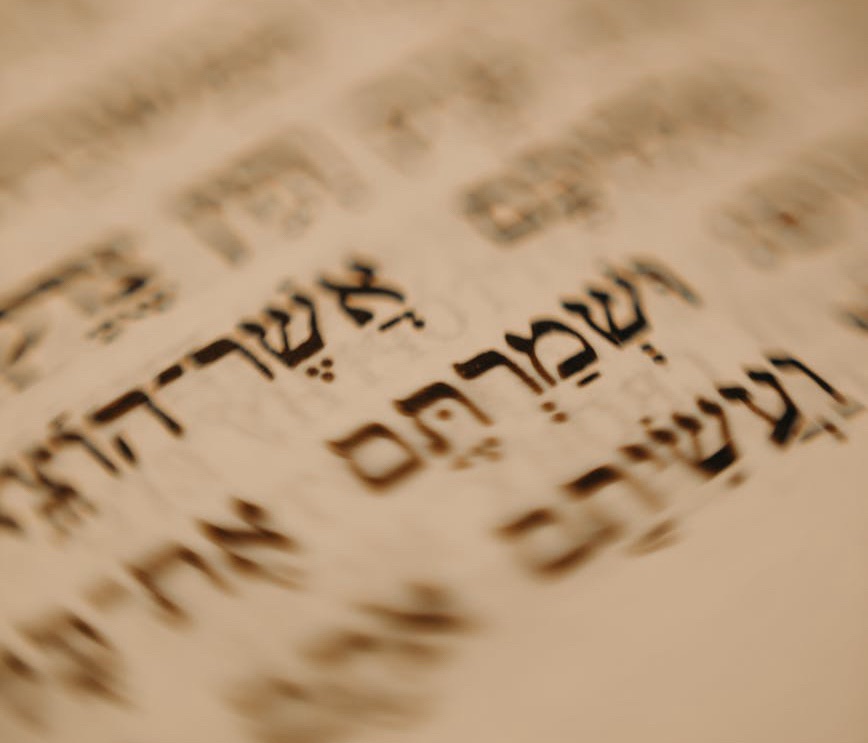
In Hebrew it reads, “In the beginning God (aleph–tav) created the heavens and the earth.”
That little word “אֵת” (aleph–tav) has no English equivalent. It’s simply the Hebrew letters Aleph and Tav. Aleph is the first letter of the Hebrew alphabet and Tav is the last. [1]
It’s basically saying “A–Z” or “the beginning and the end.”
In Greek this is Alpha and Omega, a title Jesus uses for Himself in Revelation.
So the very first sentence of the Bible subtly names God as the Alpha–Omega and the English Bibles just transliterate it away, so we lose that clue unless it’s footnoted.
2. Name Wordplay Like Simeon’s Case
Hebrew names often carry puns or meanings that vanish in translation.
For example, Genesis 29:33 (KJV), “And she conceived again, and bare a son; and said, Because the Lord hath heard that I was hated, he hath therefore given me this son also: and she called his name Simeon.”
In English we see no connection between “heard” and “Simeon.”
But in Hebrew the name Shim’on (שִׁמְעוֹן) comes from the root שָׁמַע (shama’, “to hear”).
Leah is literally saying “God heard me” and naming her son “Heard.” A Hebrew reader immediately sees that pun, but it’s invisible in KJV.
This pattern happens all over the Bible.
Reading the Hebrew reveals these word-plays and connections, which footnotes or English alone simply can’t show the same way.
3. Poetic Wordplay – Haggai’s “Bag with Holes”
The prophets were also masters of Hebrew poetry and puns that disappear in English.
Take Haggai 1:6 – the KJV says, “You that earn wages earn wages to put into a bag with holes.”
On paper it’s a strange line.
In Hebrew, however, Haggai has a clever sound-play. He juxtaposes two related words from the same root ש-כ-ר (S-K-R).
One Hebrew word means “to be drunk” and another means “to earn wages.”
In the original, the prophet repeats a form of “shakhera” (drunk) right next to “mistaker” (wages), driving home the irony of the rich working so hard for nothing.
The rhythm and rhyme (in Hebrew) make the message much punchier. But the English “drink/drink” vs “earn wages/earn wages” conceals that artistry entirely.
This is just one example of the rich sound-patterns and poetry in the Hebrew text. When you read the Bible only in English, this kind of literary beauty is mostly lost.
4. Loaded Meanings – The “Curse” of Malachi 4
Some Hebrew words carry heavy background stories.
For instance, Malachi 4:6, warns that God might “smite the earth with a curse.”
The Hebrew word translated “curse” here is חֵרֶם (herem).
But herem isn’t a casual curse word… it literally means something devoted to God by total destruction (often translated “utter destruction” or “ban”).
So Malachi’s original phrase isn’t just “smite with a curse”, it would ring in an ancient reader’s ears as “smite with utter devoted destruction.”
English Bibles just say “curse,” missing the grim historical resonance that a Hebrew reader would feel.
5. Original Imagery – “Den of Robbers” in Jeremiah
Sometimes the Hebrew phrasing gives us a vivid picture we don’t expect.
Jeremiah 7:11 asks if God’s temple has become “a den of robbers.”
In Hebrew the phrase is מְעָרַת פָּרִצִים (me’arat paritzim).
It means “a cave of breakers/raiders”[2].
In ancient Israel this conjured the image of a roadside cliff-cave where violent bandits lurked to ambush travelers.
It wasn’t a cozy hideout by any means. It was a bandit’s lair bursting out of the rock. Jesus even recalls “a certain man went down from Jerusalem to Jericho, and fell among thieves, which stripped him of his raiment, and wounded him, and departed, leaving him half dead.” (Luke 10:30)
That story imagines exactly those desert caves.
English just says “den of robbers,” which might sound like a thieves hideaway, but the Hebrew evokes a totally open wilderness cave.
Understanding מְעָרַת פָּרִצִים shows us how Jeremiah meant “thieves of faith ambushing worshippers,” a nuance we only get by studying the Hebrew.
6. Messianic Nuance – “Pierced” in Isaiah 53
Isaiah 53 is famous for describing the Messiah’s suffering. The KJV of Isaiah 53:5 reads, “He was wounded for our transgressions…”
The Hebrew behind “wounded” is מְחוּלָּל (meḥūlāl), which can literally mean “pierced” or “stabbed through.”
By using meḥūlāl, Isaiah paints a vivid picture of a body perforated by violence.
Early Christians noticed this and saw it as a prophecy of Christ’s crucifixion (Jesus being “pierced” with a spear).
The English “wounded” softens this, and you miss the more explicit “pierced” imagery unless you read it in Hebrew.
In other words, the original Hebrew word choice actually heightens the prophecy’s meaning in a way a translation might miss.

7. God’s Rainbow – A Disarmed Bow
Finally, Genesis 9:13 says, “I do set My bow in the cloud.” It sounds like a decorative promise.
But in Hebrew the word for “bow” is קֶשֶׁת (qeshet), meaning a fighting bow, the kind used with arrows in battle. [3]
The early Hebrew listener would think: God is hanging His weapon in the sky.
According to tradition and some commentators, God even hung it unstrung (no string or arrows), pointing away from earth.
It’s as if He’s tucking His sword into His belt and telling us, “No more war against you.”
• One rabbinic insight is that the rainbow’s bow has no arrow, symbolizing “no more arrows to shoot.”
• Scholars note that the bow is a sign to God Himself (i.e: He says, “I will remember My Own covenant” whenever the bow appears).
So the Hebrew casts the rainbow as God’s disarmed bow, a concrete symbol that He won’t flood the earth again.
English translations usually just call it a “bow,” losing the drama of a war-weapon hung up as a sign of peace.
Each of these examples shows why seeing the Bible in its original Hebrew can feel like uncovering a hidden world.
The KJV and other English versions give us the essential message, but the Hebrew adds layers of wordplay, poetry, and cultural color.
From secret letters and punny names, to vivid images like God’s own bow in the sky… there’s always more depth once you glimpse the original text.
You can check out a lot of the Hebrew text with professional insight here: https://www.thetorah.com/
Sources:
Discover more from Mathetes Mission
Subscribe to get the latest posts sent to your email.

 Mathetes Mission