I didn’t spend my entire life proclaiming God.
Sadly, I spent a lot of my youth proclaiming the non-existence of a God.
In growing up, acquiring more life experiences, and seeking for deeper truths, I had came to the conclusion that there 100% must be a God.
Through my own divine experiences, I had also come to find my faith in Jesus Christ.
However, like most believers (and non believers for sure), I still had doubt. I didn’t realize I was in the same boat as most other believers… I had faith, but a lack of proof or evidence to defend my faith—to anyone, or—to myself.
Below I’ve tried to accumulate and list out all the experiences, reasonings, and evidence, that lead me to believing in God, and finding Jesus Christ to be the most reliable option to put my faith in.

1. Philosophical Reasoning: Why the Idea of God Is Not Just Reasonable, but Necessary
For almost all of human history, across cultures, languages, and continents, the overwhelming majority of people have believed in a higher power. That doesn’t automatically make it true—but it’s worth asking:
Why has atheism always been the minority position, statistically and historically?
To put it simply; because humans intuitively recognize design, purpose, moral obligation, and meaning… things that are incredibly difficult to account for if the universe is nothing more than an accidental burst of matter and energy.
Let’s start at the beginning.
1.1 In the Beginning—Something or Nothing?
The Big Bang theory is the most widely-accepted scientific description of the origin of the universe.
It states that the universe had a definite beginning. That means; time, space, matter, and energy, all began to exist.
And as the philosophical principle goes:
Whatever begins to exist has a cause.
“Something comes from nothing” isn’t science; it’s magic.
Everything we know, from physics to chemistry, tells us the opposite: “you don’t get being from non-being, you don’t get energy from non-energy, and you don’t get order from pure randomness without a directing cause.”[1]
1.2 The Fine-Tuning of the Universe
If the universe were random, chaotic, or accidental, we should expect randomness, chaos, and accidental outcomes.
Instead, we find extreme precision.
Constants like gravity, the cosmological constant, electromagnetic force, and even the ratio of electrons to protons are so exact that even a microscopic shift would make conscious life impossible.[2]
Astrophysicist Paul Davies notes the fine-tuning is “overwhelming.”[3]
Francis Collins says the odds of such fine-tuning without God are “astronomically small.”[4]
1.3 The Information Code in DNA
Every cell in your body contains a 3-billion-letter digital code written in a biochemical language. Information—real language, not random noise—always comes from a mind.
We don’t get encyclopedias from explosions, and we don’t get executable code from unguided, accidental chemistry.
1.4 Consciousness: The Human Experience Materialism Cannot Explain
Humans aren’t just biological machines.
We think, reason, create, dream, love, question morality, seek purpose, and reflect upon the meaning of life.
Consciousness is not reducible to chemical reactions…
Philosopher Thomas Nagel (an atheist) openly admits materialism fails to explain mind and consciousness.[5]
1.5 Objective Morality: Why Some Things Are Always Wrong—No Matter Who You Are
Every culture agrees that some things are universally, absolutely, wrong:
• Torturing children
• Genocide
• Rape
• Slavery
• Betraying someone you love
These aren’t preferences. They’re moral realities—objective moral truths.
And objective moral truths require an objective moral lawgiver.
If humans are random accidents, then “right” and “wrong” reduce to biochemical impulses or cultural opinions. Subjectively, none of us could “rightfully” tell Hitler he was “wrong”. But no one actually lives that way. We live as if morality is real because it is.
As Cliffe Knechtle often says:
“If there’s no God, then morality is just a matter of personal taste.
And nobody lives as if that’s true.”
1.6 The Problem of Abiogenesis
Abiogenesis—the idea that life spontaneously emerged from non-life—has never once been observed, replicated, or demonstrated.
Even the famous Miller-Urey experiment has been widely critiqued for using conditions unlikely to reflect the early earth environment.[6]
• Life comes from life.
• Information comes from intelligence.
• Consciousness comes from a conscious source.
• Morality comes from a moral lawgiver.
• Creation comes from a Creator.
The existence of God isn’t just a comforting idea… it’s the most coherent philosophical explanation for reality.

2. If There Is a God… Who Is He? A Look at the Five Major World Religions
Once we conclude there must be a Creator, the next logical question is:
• Which worldview best aligns with truth, evidence, coherence, and reality?
Let’s evaluate the top five global religions in four categories:
1. Origin – Where did we come from?
2. Purpose – Why are we here?
3. Morality – How do we live?
4. Destiny – What happens after death?
And we’ll look at:
• What each religion’s “scripture” teaches
• How each founder lived
• Historical reliability
• Contradictions and strengths
• Coherence and moral character
2.1 Hinduism
Teachings & Scripture
Hinduism doesn’t have one authoritative book; the Vedas, Upanishads, Bhagavad Gita, and epics (like the Mahabharata), form a mix of mythology, poetry, moral stories, and metaphysics.
They are not historical documents in the sense Western historians use the term.[7]
Founder
No single founder.
Answers to the Big 4
Origin: The universe is cyclical. No clear beginning.
Purpose: Escape reincarnation through karma.
Morality: Karma-based, but inconsistent. Some gods commit immoral acts.
Destiny: Endless reincarnation unless achieving moksha.
Problems
• No historical anchor
• Gods often behave immorally
• Conflicting creation stories
• Caste system rooted in Hindu texts historically justified oppression
2.2 Buddhism
Teachings & Scripture
Buddhism rejects a personal God. The Pali Canon and Mahayana sutras are philosophical teachings, not divine revelation.[8]
Founder
Siddhartha Gautama (Buddha).
Answers to the Big 4
Origin: Irrelevant—ultimate questions are considered distractions.
Purpose: Escape suffering through self-extinction.
Morality: Noble Eightfold Path.
Destiny: Nirvana; cessation of desire and self.
Problems
• No God (huge issue we’ve covered thoroughly)
• No objective morality
• Self-negation contradicts human experience
• No historical evidence for supernatural claims
2.3 Islam
Teachings & Scripture
The Qur’an claims to be dictated by Allah through Gabriel. Written about 600 years after Jesus. It denies the crucifixion despite extreme historical consensus that Jesus was crucified.[9]
Founder
Muhammad.
Answers to the Big 4
Origin: Allah created everything.
Purpose: Submit to Allah.
Morality: Sharia.
Destiny: Heaven or hell based on works.
Problems
• Muhammad engaged in violence, polygamy, slave-concubinage
• The Qur’an contradicts earlier Scripture it claims to affirm
• Zero manuscript evidence older than the 7th century
• No eyewitness accounts of Muhammad’s revelations
2.4 Judaism
Teachings & Scripture
Old Testament / Hebrew Bible.
Founder
Abraham / Moses.
Answers to the Big 4
Origin: God created the world.
Purpose: Obey God’s covenant.
Morality: Ten Commandments.
Destiny: Varied views, but generally resurrection of soul and judgment.
Problems
• Incomplete story—Messianic expectation unresolved
• All prophecies pointing to the Messiah are fulfilled in Jesus according to early Jewish Christians
2.5 Christianity
Teachings & Scripture
The Bible (Old and New Testament).
The New Testament is the most historically verified ancient document in existence.[10]
Founder
Jesus Christ, who;
• claimed to be God incarnate
• performed miracles publicly
• rose from the dead
• then appeared to hundreds of eyewitnesses
Answers to the Big 4
Origin: Created by God.
Purpose: Know God, love God, represent Him.
Morality: Rooted in God’s character; objective and universal.
Destiny: Eternal life or eternal separation from God.
Problems
• many denominations and conflicts between followers
• widely used out of context to commit acts of sin
• various people have attempted to change, tarnish, or violate the authenticity and teachings of the scripture over the years
However, most the issues found with Christianity, will be found in hypocrisy and sinful ways of evil people trying to corrupt Gods word for their own agendas. Thankfully, we can compare what we read today with the manuscripts written back in the first and second centuries while Jesus’ eyewitnesses, and those that could call “B.S.” were around.
Strengths
• Historically anchored
• Eyewitness testimony
• Radical moral consistency; Jesus lived what He taught
• The resurrection has strong historical backing
3. Historical Evidence: Which Religion Stands on Solid Ground?
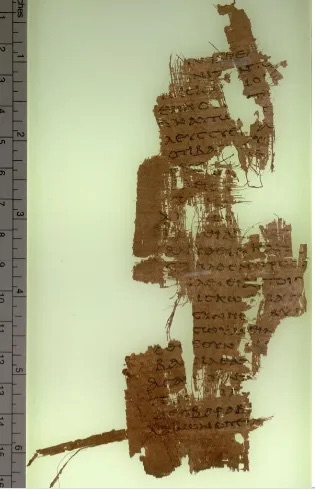
3.1 Manuscripts
Christianity
• 5,800+ Greek manuscripts
• 20,000+ in other languages
• Dating to within decades of Jesus
• Verified by archaeology (inscriptions, places, coins, people)[11]
Islam
• First complete Qur’ans appear 100–200 years after Muhammad
• Earlier fragments show textual variations
• Zero external historical verification for Muhammad’s miracles
Buddhism & Hinduism
• No early manuscripts
• Texts evolved over centuries
• Mythological style, not historical
Judaism
• Dead Sea Scrolls dating as far back as 300BC, or further, confirm massive reliability
• Strong archaeological corroboration
3.2 Style: History or Myth?
The Gospels read like ancient biography (bios), including:
• Dates
• Places
• Names
• Political leaders
• Geography
• Eyewitness details
The Vedas read as poetic mythology.
The Qur’an is a collection of proclamations, not historical narrative.
The Buddhist sutras are philosophical dialogues written centuries after the Buddha.
3.3 Overlaps and Contradictions
a). Many religions contain flood narratives; suggests a rooted ancient memory
b). Moral overlap exists because humans share God’s moral imprint
c). Christianity uniquely offers historical grounding, fulfilled prophecy, and a resurrected Messiah
d). New Age / Agnosticism: when someone adopts a “pick-and-choose” spirituality (selecting ideas from Christianity, Buddhism, Hinduism, and secular philosophies while rejecting the doctrinal frameworks those beliefs come from)
That’s making a far stronger claim than most people often realize. They’re basically assuming that billions of people across history, whole religious traditions, and centuries of scholarship have all fundamentally misunderstood the very concepts they themselves are casually rearranging.
Ironically, what is often presented as the most “open-minded” approach actually becomes one of the narrowest because it places the individual as the ultimate authority over every major worldview. Elevating personal intuition above the teachings, coherence, and historical roots of the systems being borrowed from… systems that contradict one another a lot, thus, can’t all be true.
Instead of engaging with any tradition on its own terms, this method reshapes each one to fit personal preference or life experience. This isn’t intellectual humility, it’s an implicit claim to superior spiritual knowledge over entire civilizations, centuries of scholarly studies, and massive sacrifices made by many.
Conclusion: Why Jesus Stands Alone
When you combine:
1). Philosophical reasoning
2). Moral reality
3). Scientific coherence
4). Historical evidence
5). Manuscript strength
6). Archaeological confirmation
7). The life, teachings, and resurrection of Jesus
…Christianity rises as the most intellectually, historically, philosophically, and morally coherent worldview… bar none!
Jesus doesn’t just answer the big questions…
He answers them in a way no one else can.

“Blind Faith”
Is ignorance.
God gave us a rational mind to use. Use it.
I mainly wrote this article in hopes that it gives a struggling believer a foot to stand on, and a foundation to build upon.
Outside my own experiences that I can’t really explain, this is basically an exact walk-through/breakdown, of step-by-step, how I found my faith in God and then, how I found my faith in Jesus Christ. From building upon this, I’ve found stronger faith and a deeper relationship with God without having to question anything.
5 Trust in the Lord with all your heart, and do not lean on your own understanding. 6 In all your ways acknowledge him, and he will make straight your paths. (Proverbs 3:5–6, ESV)
If this article could be a slight breeze to knock down—even just—one card, in a non-believers ‘house of cards’, I’d see that as a world of good.
Most likely, I end up also linking this article to anyone that tries to question my faith, if I don’t have time for a deep conversation at that time.
I hope this breakdown was easy to read through, yet thought provoking, or eye opening. Please share this with a friend, family member, or someone that thinks you just have blind faith.
Comment and let me know any feedback, questions, or anything.
May God be present in your life today and you have a blessed day!
Thank you for reading!

Main Sources outside scriptures
I use https://www.logos.com for all my research and sources for this article. With the LogosMAX subscription, you get access to over 1000 books, commentary’s, study bibles, and even their custom made AI tools. You can start your free trial at https://www.logos.com. *not an affiliate link unfortunately, I just really love and recommend Logos!
1. William Lane Craig, Reasonable Faith (Crossway, 2008).
3. Paul Davies, The Accidental Universe (Cambridge University Press, 1982).
4. Francis Collins, The Language of God (Free Press, 2006).
5. Thomas Nagel, Mind and Cosmos (Oxford University Press, 2012).
6. James Tour, “Time Out,” Chemistry Critical Essay, 2019.
7. Gavin Flood, An Introduction to Hinduism (Cambridge University Press, 1996).
8. Richard Gombrich, What the Buddha Thought (Oxford University Press, 2009).
9. Bart Ehrman, Did Jesus Exist? (HarperOne, 2012).
10. F.F. Bruce, The New Testament Documents: Are They Reliable? (Eerdmans, 1981).
11. Craig Evans, Jesus and the Manuscripts (Hendrickson Academic, 2020).
Study the Bible Deeper
• If you’re serious about growing in your understanding of Scripture, I highly encourage you to try Logos Bible Software—you can start with a free trial and see how it transforms your study time. — FREE TRIAL
• And for solid, biblically sound books and resources, take a look at ChristianBook.com—a great place to build your library. — CLICK HERE
Discover more from Mathetes Mission
Subscribe to get the latest posts sent to your email.

 Mathetes Mission
1 Comment