The Bible is not a single book but a library of books written over many centuries. Its story begins in ancient Israel, where people preserved God’s revelations through oral traditions and writing.
The scripture began in the Jewish culture here;
The Torah came to be seen as Israel’s foundational law. Tradition holds Moses as the author of Genesis through Deuteronomy (around 1400–1200 B.C.).
Soon after, Israel’s historians and prophets recorded the nation’s story;
The Historical books (Joshua through Esther) span Israel’s conquest, monarchy, exile and return (written roughly 1400–400 B.C.).
The Books of poetry and wisdom (like Psalms, Proverbs, Job) emerged largely in the first millennium B.C. (roughly 1000–700 B.C.).
The Prophets (Isaiah, Jeremiah, Ezekiel and the Minor Prophets) delivered God’s messages from about 800 B.C. through the Exile (ending ~400 B.C.).
In short, Jewish Scripture was composed bit by bit over centuries as history unfolded.
Here’s a timeline:
- Torah –
Written ~1400–1200 B.C.: Genesis through Deuteronomy
- Historical Books –
Written 1400–400 B.C.: Joshua, Judges, Samuel–Kings, Ezra–Nehemiah, Esther.
- Wisdom & Poetry –
Written ~1000–700 B.C.: Job, Psalms, Proverbs, Ecclesiastes, Song of Solomon.
- Prophets –
Written ~800–400 B.C.: Isaiah, Jeremiah, Ezekiel, Daniel and the Twelve “Minor” Prophets.
Then later, in the New Testament we got:
- Gospels & Apostles –
Written A.D. 50–100: The four Gospels (Matthew–John) cover Jesus’ life (completed by ~90 A.D.), Paul’s letters (c. 50–67 A.D.), other epistles (Peter, James, etc., 60–90 A.D.), and Revelation (~95 A.D.).
These dates are broad scholarly estimates; many books were compiled, edited and preserved by generations of scribes before reaching their final forms.
For example, the Torah itself was edited and studied by priests and scholars (especially after the Exile in the 500s B.C.) to become Israel’s “canon” of law. By the second century B.C., Jewish scholars had basically agreed on the Law and Prophets as holy Scripture, and by the end of the first century A.D. the Jewish Tanakh (Hebrew Bible of 24 books) was largely set.
Archaeological finds confirm the Bible’s ancient origins and faithful transmission.
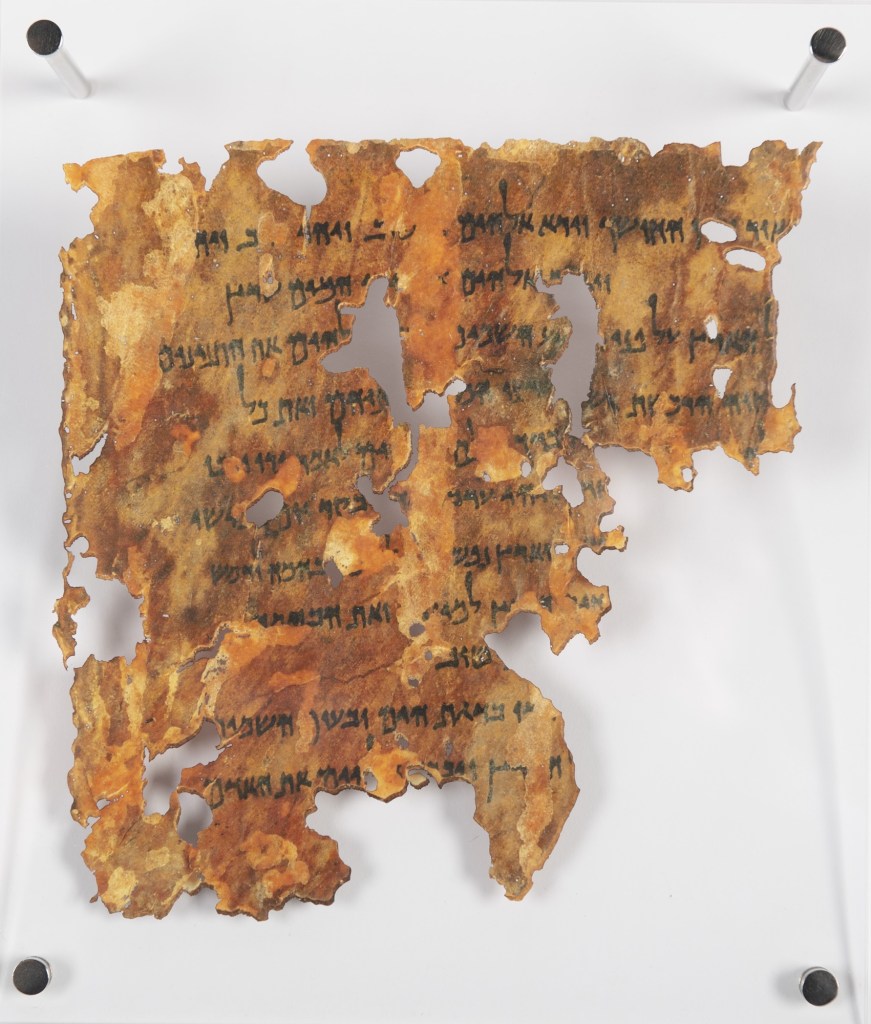
In 1947 the Dead Sea Scrolls were discovered in caves near Qumran (Israel), containing fragments of every Old Testament book except Esther. The scrolls date from roughly 250 B.C. to A.D. 68.
And it’s good to note, scholars find these ancient texts are almost identical to our later Bible manuscripts.
The Greek Bible and Extra Books
After Alexander the Great, many Jews spoke Greek, so a Hebrew-to-Greek translation of the Old Testament was started (the Septuagint/LXX) in the 200s–100s B.C.
The Septuagint included all the Hebrew books plus additional Jewish writings (later called the “Apocrypha” or “Deuterocanon”), such as Tobit, Judith, 1–2 Maccabees, Sirach, Wisdom of Solomon and additions to Esther and Daniel. These books were written around about 300 B.C. to A.D. 100 and were highly valued in many Jewish communities.
The early Church, mostly speaking in Greek, adopted the Septuagint as its Old Testament.
Many Church Fathers (like Clement of Rome, Origen and Irenaeus) quoted these books as Scripture. This is why Catholic and Orthodox Christians include seven or more of these extra books in their Old Testaments, whereas modern Judaism (and later Protestants) do not consider them canonical.
The Catholic Church calls the Greek “extra” books Deuterocanon (“second canon”), while Protestants typically call them Apocrypha (“hidden”).
In practice today, Protestant Bibles have 66 books (39 in the Old Testament + 27 New Testament), and the Catholic Bible has 73 books (The Old Testament 7 deuterocanonical books added). Eastern Orthodox Bibles usually contain about 76 books. They keep the same 73 as Catholicism and add a few others (like, 1 Esdras, 3 Maccabees and the Prayer of Manasseh). The Ethiopian Orthodox Church goes further still, listing as many as 81 books, including Jubilees, Enoch and others.
All agree on the 27-book New Testament, but differ on the Old Testament roster.
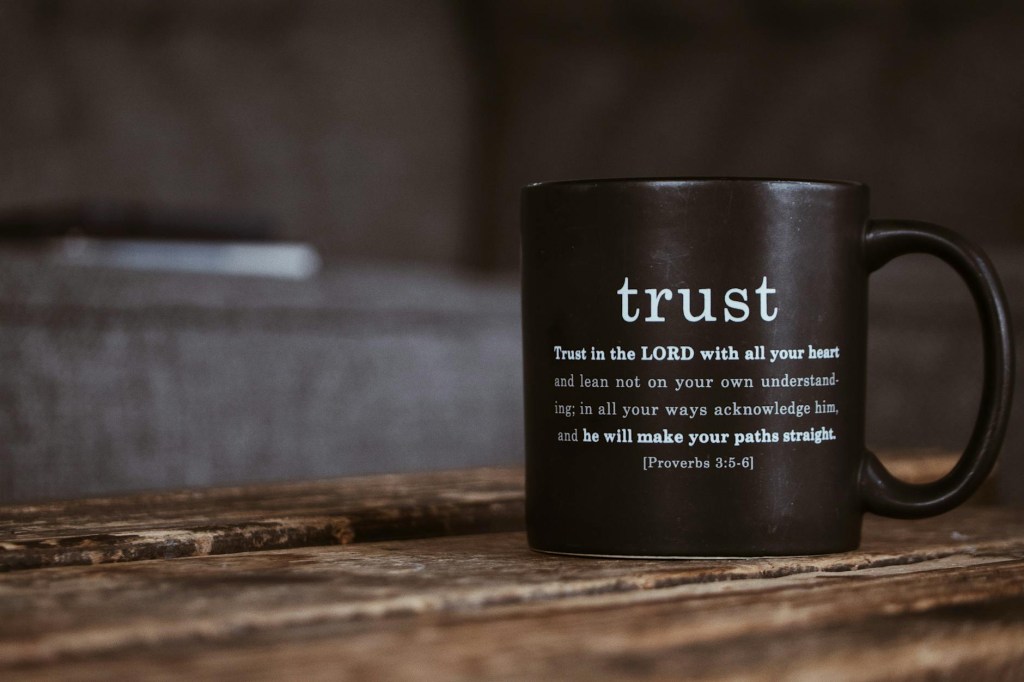
The Life of Jesus and New Testament Writings
Around the turn of the millennium, God’s final revelation was unfolded in Jesus Christ.
The New Testament records His life and the early Church’s response. The four Gospels (Matthew, Mark, Luke and John) were written by eyewitnesses or their associates, likely between 50 and 90 A.D. The Epistles (letters) were written by apostles to the first Christian communities.
The Apostle Paul wrote most of his 13 letters in the 50s–60s A.D. (Romans, Corinthians, Galatians), other letters (to Hebrew Christians, Peter, John, James, Jude) were written by mid-late first century. The final book, Revelation, was authored by John the Apostle around 95 A.D.
Within a few decades these books were circulating widely. Church leaders quoted from them and recognized them as sacred.
- By the early 200s, collections of Christian writings were being compared and tested. For example, a 2nd-century list (Muratorian Canon, 170 A.D.) shows almost the full modern New Testament (some early works like Hebrews were still debated).
- By the late 300s, there was broad agreement. Church councils in North Africa (Hippo 393, Carthage 397) cited all 27 New Testament books, and influential leaders like Athanasius of Alexandria (in 367) explicitly listed the exact 27 book canon used today.
Setting the Canon: Councils and Debates
Even after Jesus, Christians did not have a single Bible until the Church gradually decided one.
In the first 300 years, different regions read slightly different scriptures alongside local writings. BibleProject notes that “there are no records of early Christian councils discussing the contents of the Bible before the 300s”, and only by the 4th century did a common canon emerge.
In the 300s–400s A.D., church fathers and councils wrestled with questions of which books were truly “God’s Word.”
Jerome (Latin Vulgate translator, 382–405) insisted the Old Testament match the Jewish Hebrew canon, whereas Augustine in Africa defended the wider Greek canon (including Tobit, Judith, etc.) as legitimate Scriptures.
Then, key councils formally endorsed a canon.
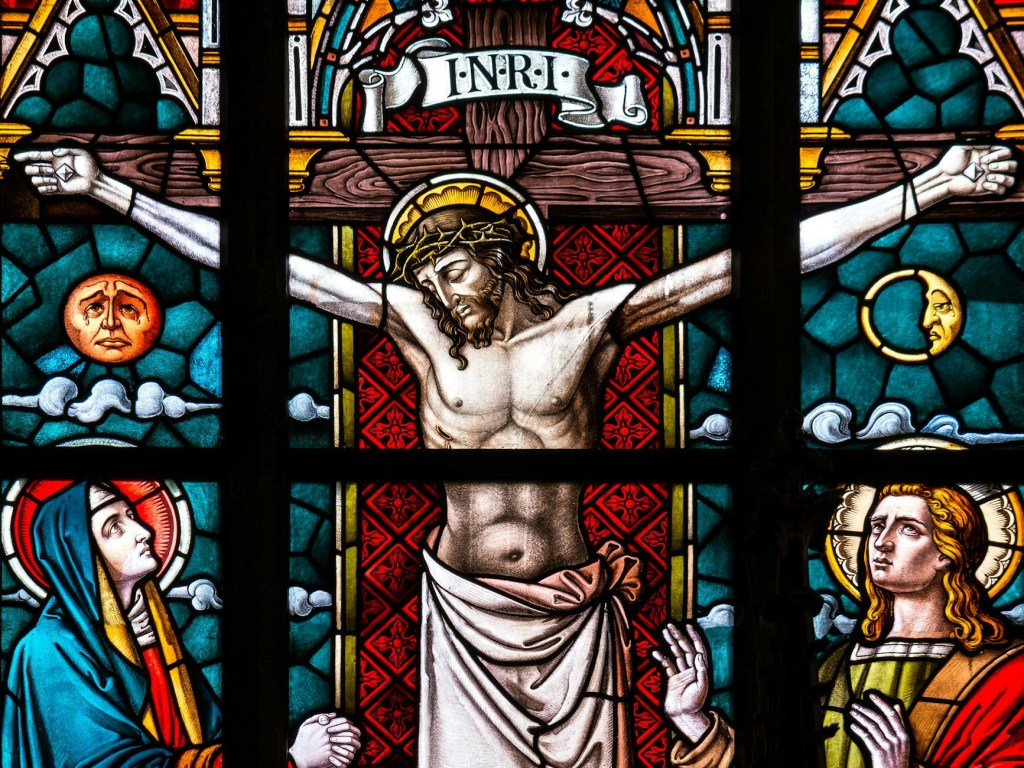
Eastern councils and leaders (e.g. Cyril of Jerusalem, Athanasius, and the Alexandrian Church) included all the deuterocanonical books in their lists, while Western councils (Hippo 393, Carthage 397, and later Florence 1442) affirmed the same expanded Old Testament.
The Catholic Council of Trent (1546) definitively set the Catholic canon at 73 books, explicitly including the seven deuterocanonicals.
In the meantime, the Protestant Reformation (16th century) led leaders like Martin Luther to reject the extras. Early Protestant Bibles printed the Apocrypha in a separate section, but eventually most Protestant traditions dropped them entirely.
Thus, we have the modern Protestant Bible settled at 66 books, while Catholic Bibles have 73 and Orthodox about 76.
From Scrolls to Books to Prints
Throughout its early history, the Bible was copied by hand…
The meticulous, painstaking, dedicated work of scribes and monks…
A massive shift happened in 1440, when Johannes Gutenberg’s printing press produced the first printed Bible, revolutionizing access to Scripture. Soon the Bible was translated into languages that even common people spoke and not just the wealthy and royal.
Luther’s German Bible (1522–31) and early English Bibles (Coverdale, Geneva 1560, King James 1611) carried the text to even more people.
* Interestingly, these first Protestant translations still included the deuterocanonical books in an “Apocrypha” section, reflecting the older belief that they were helpful reading even if not counted as Scripture.
After the Reformation controversies, most Protestant editions omitted the Apocrypha altogether, while Catholic and Orthodox Bibles continued to include them as part of the Old Testament. Yet all groups treasure the core Scriptures they share.
At the end of the day, the debates over exact boundaries aside, the central message of these books has always been the same.
New readers should know that the Bible we hold today is the result of a long journey.
Oral traditions, scribes, translations and councils all played a part.
The Bible was written by many authors over the course of about 1,500 years, but its current form was settled by church consensus in the early centuries of Christianity, reflecting both Jewish tradition and the early Church’s reception of Scripture.
The 66 (or 73, or more) books were gradually segregated as Scripture because generations of believers discerned God’s voice in them.
That shouldn’t discourage you from your journey with Christ.
My sheep hear my voice, and I know them, and they follow me. – John 10:27
I study this history so that I understand the Bible more.
Not as a random collection of many books, but as the unified story of God’s dealings with humanity, the gift of salvation, how to be a better person, how to live a better life, and so much more… all preserved through history over thousands of years with evidence to back it.
And we’re going to get into so much more evidence in the coming weeks!
Next week we’re first going to study “What the Scripture says about Salvation!”
See you then!
God Bless You Friend! 🙏✝️
Sources: [watermarkwaves] [ logos.com] [textandcanon] [saintjohnchurch] [bibleproject].
Study the Bible Deeper
• If you’re serious about growing in your understanding of Scripture, I highly encourage you to try Logos Bible Software—you can start with a free trial and see how it transforms your study time. — FREE TRIAL
• And for solid, biblically sound books and resources, take a look at ChristianBook.com—a great place to build your library. — CLICK HERE
Discover more from Mathetes Mission
Subscribe to get the latest posts sent to your email.

 Mathetes Mission
1 Comment