

1. What We Will Be Deep Diving Into!
At the close of the Gospel of Mark, the twelve‑verse section commonly designated “16:9‑20” (known as the Longer Ending of Mark) has been one of the most frequently discussed passages in New Testament textual criticism.
On one hand, nearly every English Bible includes it in the Gospel of Mark. On the other hand, the earliest Greek manuscripts don’t. This raises important questions:
Was this part of Mark’s original text? What does this mean for the reliability of the New Testament?
Let’s walk through the historical manuscript and translation evidence, examine internal features of the text, and then reflect on how we can trust the Scriptures, even in light of a variant.
2. Context & Basic Description
The Gospel traditionally attributed to John Mark (a companion of Peter) ends in most modern editions with chapter 16. Verses 1‑8 describe the women at the tomb, the angelic announcement of the resurrection, and the reaction: “for they were afraid” (v.8).
Immediately following that comes verses 9‑20, which report post‑resurrection appearances of Jesus, a commissioning of the disciples, and the ascension.
Because of the abrupt feeling of ending at 16:8, the longer ending has been viewed by some scholars as a later addition—possibly to provide a more familiar “ending” parallel to the other Gospels.
Others argue it was original.
3. Manuscript Evidence (External Evidence)
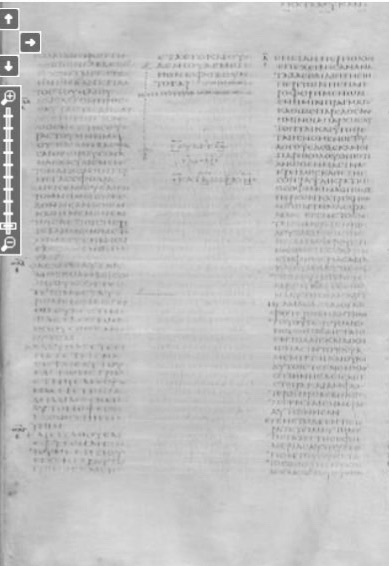


https://www.codexsinaiticus.org/en/manuscript.aspx?__VIEWSTATEGENERATOR=01FB804F&book=33&lid=en&side=r&zoomSlider=0
Some manuscripts leaving out the longer ending:
• Codex Sinaiticus (4th century) ends Mark at 16:8.
• Codex Vaticanus (4th century) likewise ends at 16:8.
Manuscripts including the longer ending:
– The vast majority (well over 1,600 later Greek manuscripts) include 16:9‑20. [biblicaltraining.org]
– Early translations (Old Latin, Syriac, Coptic) preserve the longer ending or recognize it. [biblesearch.com]
– Church Fathers such as Irenaeus (c. 180 AD) appear to quote from the longer ending (e.g., Mark 16:19) in Against Heresies. [textandcanon.org]
Summary of external evidence:
Two of the earliest major Greek witnesses leave out the longer ending, but the overwhelming extent of manuscript tradition (by number) and early Christian usage include it.
Modern translations often compromise by printing the verses but bracket them or insert a footnote like “Some manuscripts end at 16:8.” Which adds clarity and wisdom for readers.
4. Internal Evidence (Style, Content, Literary Fit)
Several features raise questions about whether 16:9‑20 was composed by the same author of the rest of Mark:
A). The transition from v.8 (“And they went out and fled from the tomb… for they were afraid”) to v.9 (“Now when He rose early on the first day of the week…”) involves a change of subject and timing.
The Greek ταις ημεραις “the first day of the week” appears again, whereas Mark already uses that term in v.1. Some argue this redundancy is awkward. [biblicalarchaeology.org]
B). Vocabulary differences: 16:9‑20 contains words and phrases not found elsewhere in Mark (for example, “appear,” “signs,” “believed”) that some scholars view as indicative of a later writer borrowing from other Gospels. [biblicaltraining.org]
C). The content appears to harmonize the other Gospels’ resurrection material (e.g., parallel to Matthew 28, Luke 24) rather than uniquely Markan. These observations support the view that Mark’s original ending may have been lost or intentionally ended at 16:8. [textandcanon.org]
That said, internal evidence is interpretive, not definitive.
The presence of variation does not mean the text is “corrupt”, in my opinion, it instead just shows an example of the human process of transmission and how things can be more than meets the eye, or just a “simple read through”.

5. Translation and Variant Considerations
Most modern English Bibles include Mark 16:9‑20, but they differ in how they handle it:
• Some print the text in full without comment (e.g., many NKJV or NASB editions).
• Others include brackets or margin notes (e.g., ESV, NIV footnote: “Some of the earliest manuscripts do not include 16:9–20.”)
• Variants: it is not so much a case of word‑by‑word variation here, but whether or not the passage is original. Thus translation differences are less significant than the inclusion decision.
• How readers should interpret: The note does not mean the verses are “false” or “fabrication” automatically; rather, it signals textual scholars’ caution about origin while acknowledging the verses’ longstanding use.
6. Theological & Practical Implications (with a Focus on Trustworthy Transmission)
What this variant does not do: It does not undermine the doctrine of Scripture. The main message of Mark — the death, resurrection and commissioning of Jesus — is supported by other Gospels and early tradition. The longer ending contains no major unique teaching that overturns the Gospel. [apologeticspress.org]
What this variant does show:
It gives us an example that the process of transmission involved human copying, preservation, occasional addition, and careful evaluation.
That transparency gives confidence, not fear. If differences exist and are documented, the tradition is robust.
It invites readers into confidence: even when uncertain what the “original” wording was, the essence of the Christian message remains consistent and trustworthy.
It encourages meaningful reading!
When you see a footnote in your Bible, you can know why it’s there! It doesn’t mean you throw the Bible away, but you read with awareness of the text’s history, and don’t be afraid to do research.
How to Apply All This lol
When you come across a passage like Mark 16:9‑20 with bracketed text or footnotes, use it as an opportunity to learn.
Look at the note, ask “Which manuscripts omit this? Why?”
Recognize that the textual tradition is stronger than the myth that the Bible was “massively corrupted”… because scholars have cataloged, compared and preserved copies systematically.
Trust the message of the Gospels, while appreciating that the Scriptures we read are the result of meticulous transmission over centuries.

7. Let’s Wrap This All Up
To recap:
• The external evidence is mixed. Two very early major manuscripts omit Mark 16:9‑20, but the vast majority of later manuscripts include it.
• Internal evidence raises stylistic and literary questions about the longer ending’s originality.
• Translation practice reflects this textual situation by notifying readers of the variant.
• Despite this variant, I think you can trust the New Testament because the core message is intact, and the transparency of the manuscript evidence helps, not hurts, the confidence.
Study the Bible Deeper
• If you’re serious about growing in your understanding of Scripture, I highly encourage you to try Logos Bible Software—you can start with a free trial and see how it transforms your study time. — FREE TRIAL
• And for solid, biblically sound books and resources, take a look at ChristianBook.com—a great place to build your library. — CLICK HERE
Discover more from Mathetes Mission
Subscribe to get the latest posts sent to your email.

 Mathetes Mission